Keeping a Garden Journal You Will Actually Use
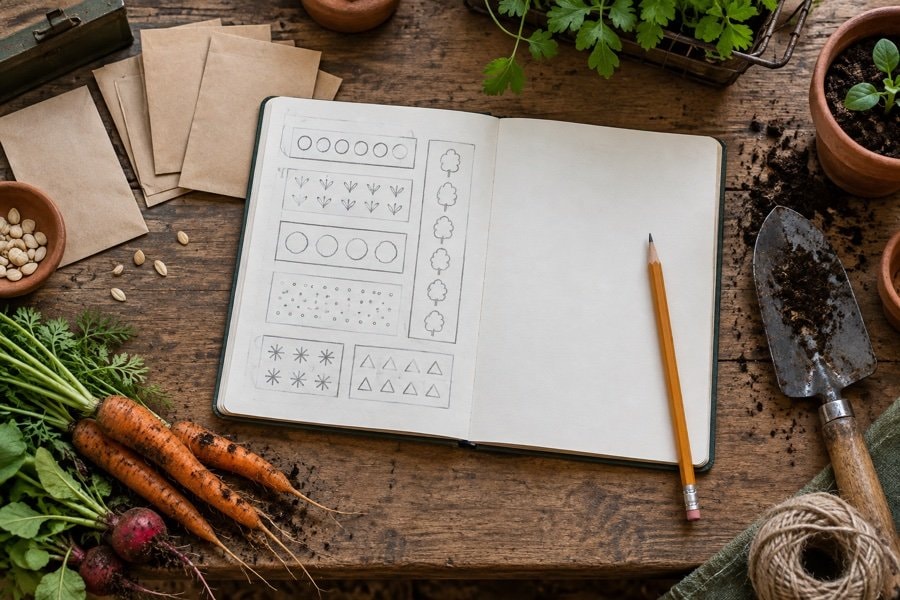
A useful garden journal answers future questions. It does not need perfect prose; it needs dates, locations and observations specific enough to guide the next season.
Choose a Format That Lives Near the Work
A weather-resistant notebook, binder, spreadsheet or simple notes file can all work. Choose the method you can update with muddy hands and find in winter. If using loose plant tags or seed packets, give them a labeled envelope so they become part of the record rather than drawer clutter.
Keep a backup of digital records and photograph paper bed maps at season's end. Consistency matters more than complexity. One page updated weekly is more valuable than a detailed system abandoned in May.
Draw a Bed Map
Number permanent beds and containers, then mark crop, variety and planting date. Record second and third plantings as they occur. This map makes crop rotation possible and helps locate a successful variety after labels fade.
Include fixed features such as trees, walls, taps and downspouts. Note where shade falls in spring and midsummer. Over time, the maps reveal how the garden itself changes as shrubs grow and soil is regraded.
Record Dates That Affect Decisions
Write down sowing, transplanting, first bloom, first harvest, peak harvest and final removal. Note frost, heat waves and unusually heavy rain in plain terms. Exact measurements are helpful when available, but a reliable description is better than an invented number.
For succession crops, record the interval between sowings and whether later batches caught up. For perennials, note emergence and pruning dates. These patterns help adjust next year's calendar to your site instead of a generalized regional chart.
Measure Outcomes Simply
Harvest weights are useful, but they are not the only measure. Record taste, storage quality, disease, ease of picking and whether the household actually used the crop. A high-yielding vegetable no one enjoys should not occupy the same space next year.
Use quick ratings consistently: poor, fair, good or excellent can be enough. Add one sentence explaining the rating. Photos from the same viewpoint provide an honest view of spacing, vigor and seasonal change.
Document Problems Without Jumping to Conclusions
When damage appears, note which plants are affected, where symptoms began, recent weather and what you see on leaf undersides or roots. Photograph the whole plant and a close detail. Avoid writing a diagnosis as fact before it is confirmed.
Record any response and what happened next. This is especially important for watering changes and pest control, where several interventions at once make results impossible to interpret. The observation process in disease prevention provides a useful checklist.
Schedule Two Reviews
At midsummer, look for gaps in bloom, recurring dry areas and tasks that are taking too much time. Make small changes while the evidence is visible. After the season, summarize five things to repeat, five to change and any seed that needs replacing.
Use that summary before ordering or redesigning. Compare it with the broader gardening guide library to find the next skill worth developing. The journal's purpose is not to prove the season went perfectly; it is to keep the garden from teaching the same expensive lesson twice.
A Small, Useful Trial
For one month, make a five-minute entry after the same weekly garden round. Include only what changed, what was done and the next check. Add one fixed-view photograph. At month's end, list the decisions the notes made easier. Remove any journal field that never helped, and keep the small structure that you will still use during harvest season.
Give each entry three searchable anchors: a date, a bed or container number and the crop or task. Add a simple index page for recurring subjects such as frost, irrigation repairs, first harvest and pest observations. At the monthly review, transfer only genuine next actions to the calendar and leave raw observations in place. This keeps the journal from becoming a second chore list while making last season’s evidence easy to retrieve when the same decision returns.
Use the Five-Minute Rule
Set a timer after one weekly garden round. Record only what changed, what you did and what needs checking next.
Keep planned work visually separate from observed facts. “Leaves wilted at 3 p.m.” is an observation; “add more water” is a proposed response that may or may not be correct. That distinction makes later diagnosis more honest. When an action is taken, add its date on a new line and return after a defined interval to record what changed.