Gardening and Your Body: Work With Less Strain
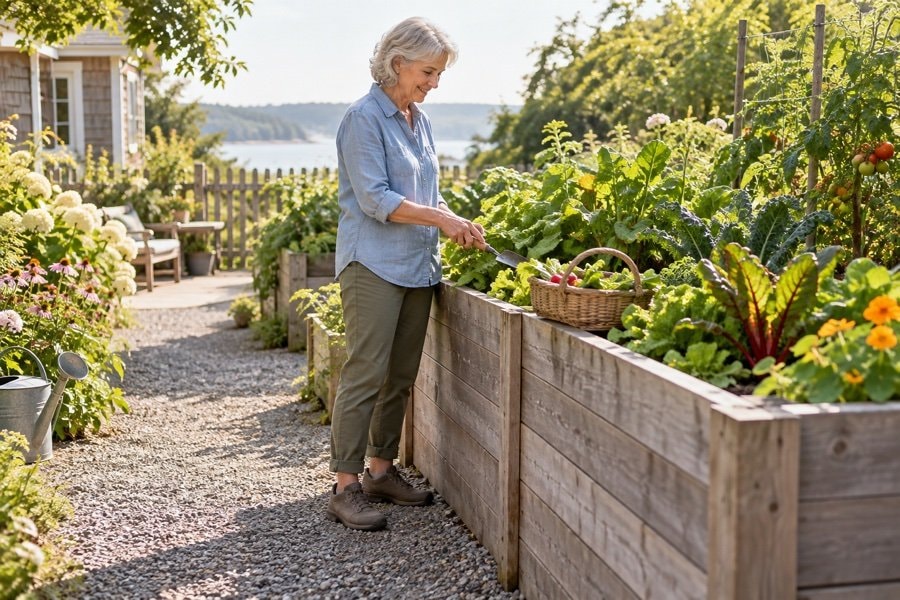
Gardening can involve the same force, repetition and awkward positions as demanding work. A few changes to layout, tools and task order can make the day more manageable without taking the satisfaction out of doing it yourself.
Fit the Job to the Gardener
Ergonomics means shaping a task around the person doing it. The same principle that applies in a workplace applies when hauling compost, pruning a hedge or transplanting seedlings. The public-health overview of ergonomics identifies force, repetition, awkward posture and duration as factors worth controlling. In a garden, those are design questions as much as body questions.
Begin by noticing which jobs make you postpone a visit to the garden. A distant hose, low bed, heavy gate or badly placed compost pile can create hundreds of unnecessary steps and reaches. Change the setup before concluding that discomfort is simply part of gardening.
Choose a Practical Guide
For ground-level work, start with knees and kneeling. It compares pads, kneelers, stools and half-kneeling positions, with a plan for getting down and up safely. Digging and lifting covers smaller loads, stable footing and moving bags or pots close to the body.
Repetitive cutting has its own demands. The guides to hand, wrist and grip load and shoulder and overhead work explain how sharp blades, neutral wrist positions and shorter work zones reduce force. The tool ergonomics guide helps test handle length, weight and controls before a tool becomes part of the shed.
Change the Growing Space
Accessible design can remove a difficult motion entirely. Raised beds and vertical growing bring work closer, while seated and standing-height setups address reach, knee clearance and stable surfaces. Adaptive gardening techniques gathers small modifications for watering, sowing, carrying and harvesting.
Accessibility is personal. A high bed that helps one gardener may force another to lift soil too far. Build a temporary mock-up with a table, box or cardboard edge and test the reach from the position that will actually be used.
Prepare and Pace the Day
Use a short warm-up to move through the ranges the work will require, then start with a moderate task. The pacing guide shows how to break a large plan into work blocks, alternate motions and define a stopping point before fatigue turns technique sloppy.
Afterward, close out a heavy garden day by cooling down, putting tools away safely and recording unfinished jobs. Recovery in this section means sensible rest and work planning, not diagnosis or treatment.
Adapt for Age, Joints and Weather
The gardening with arthritis guide focuses on larger grips, shorter sessions and layouts that reduce repeated joint load. Gardening after 50 emphasizes honest capacity, balance, lighting and preserving energy for the part of gardening you value most.
Weather changes the workload. Heat, hydration and sun safety covers shade, timing, water, clothing and warning signs that mean the garden work should stop. Heavy jobs are optional; heat exposure is not something to push through.
Know When Garden Advice Is Not Enough
This section offers practical gardening technique, not medical care. Sudden injury, severe or worsening symptoms, new numbness or weakness, chest pain, fainting, confusion or symptoms after a fall call for prompt professional attention rather than another tool adjustment. Ask your own clinician about gardening if a health condition, medication, recent procedure or persistent symptom may affect safe activity.
Use the guides as a menu, not a test. Change one high-effort task this week, observe whether the new setup is easier and refine it. A well-designed garden should make room for the gardener's changing reach, strength, time and interests.
A Small, Useful Trial
Choose the garden task you avoid most and observe its full sequence from gathering tools to cleanup. Circle every deep bend, long reach, tight grip, lift and unnecessary trip. Redesign one repeated motion with a closer material station, different handle or higher work surface. Test it for three short sessions before deciding whether the change belongs in the permanent layout.
Turn the observation into a task map with three columns: motion, cause and possible change. A long reach may come from bed width, a tight grip from a dull pivot and repeated carrying from where materials are stored. Make the easiest reversible change first and test the entire sequence, including setup and cleanup. If the new arrangement merely moves the difficult motion elsewhere, revise it. The strongest garden adaptations remove a repeated demand instead of asking the gardener to tolerate it longer.
Design From the Working Position
Measure reach while seated, kneeling or standing exactly where the task occurs. A dimension that looks convenient on paper may feel very different with a full watering can in hand.