Heat, Hydration and Sun Safety in the Garden
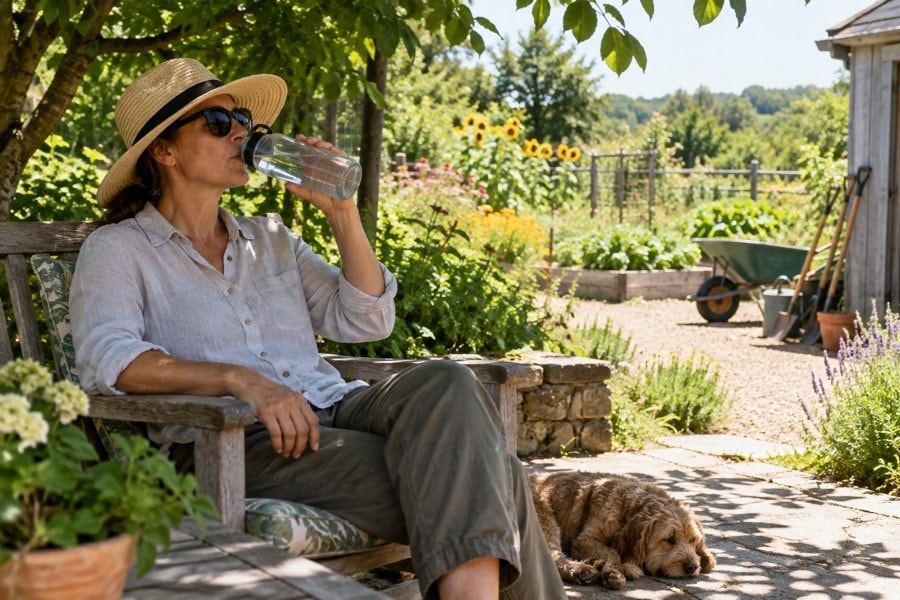
Heat changes what counts as a reasonable garden task. Timing, shade, water and a shorter workload should be planned before the day becomes hot.
Check Conditions Before Starting
Look at temperature, humidity, direct sun and local weather advisories, then consider how strenuous the task will be. Digging in still sun creates a different load from labeling seedlings in shade. Move heavy work to a cooler period or postpone it when conditions are unfavorable.
The public-health overview of heat stress identifies direct sun, humidity, limited air movement, exertion, dehydration and lack of acclimatization among important risk factors. Gardeners returning after a cool season should increase hot-weather work gradually.
Put Water and Shade at the Work Area
Bring water out before starting and place it where breaks will happen. Drink regularly rather than waiting until the far end of the property feels worth the walk. For longer or unusually strenuous hot work, your own clinician can advise about hydration when health conditions or medications affect fluid or salt needs.
Create a shaded rest point with a stable chair. The heat-work recommendations emphasize accessible cool water, more recovery time in a cool area and shorter work periods as heat, humidity, sun and workload rise.
Wear Practical Sun Protection
Choose lightweight clothing that covers skin, a broad-brimmed hat and sunglasses suited to outdoor work. Use sunscreen on exposed skin according to its label and reapply as directed, especially with sweating. Keep a clean supply by the exit so protection is part of setup.
The public-health sun safety guide recommends shade, protective clothing, a hat, sunglasses and broad-spectrum sunscreen. It also notes that ultraviolet exposure occurs on cloudy and cool days, so temperature alone is not a sun guide.
Reduce the Workload
Use smaller loads, long-handled tools and drip irrigation. Alternate strenuous tasks with shaded, low-force work and take breaks before discomfort becomes pronounced. Do not treat the hottest hours as an endurance challenge.
Work with another person during demanding heat when possible and check on each other. Keep a charged phone accessible. The task plan in pacing a garden day helps separate essential watering or harvest from jobs that can wait.
Recognize Stop-Work Signs
Headache, nausea, dizziness, unusual weakness, heavy sweating or worsening discomfort can signal heat-related illness. Stop work, move to a cool place and seek medical advice. Confusion, slurred speech, seizures, fainting or loss of consciousness are emergencies: call emergency services and begin rapid cooling while help is coming, following public-health emergency guidance.
Do not leave a person with suspected serious heat illness alone. When in doubt, get professional help. Garden irrigation and tool cleanup are not priorities during a possible emergency.
Close the Day Safely
Move to a cooler place, continue drinking water and change out of wet clothing. Secure sharp tools and hoses only if it can be done without further heat exposure; otherwise ask someone else or return later.
Record conditions and the task that felt difficult. Adjust the next day's start time, load and break schedule. Use the heavy-work closeout for a calm finish. The correct response to heat is to change the garden plan, not to push harder.
A Small, Useful Trial
Before a warm day, write a cooler start time, shaded break location, water location and hard stopping point. Separate essential watering from optional physical work. Record conditions and how the plan felt without trying to establish a personal heat limit. If warning signs occur, stop and follow public-health guidance; do not repeat exposure as an experiment.
Post the plan where someone else can see the work area and expected finish time, and keep a charged phone within reach. On the day, respond to actual conditions by shortening or canceling optional work; never extend the trial to discover a personal limit. Record which jobs can be moved permanently into shade or a cooler season. If any warning sign appears, end the work and follow the cited public-health guidance rather than using the event as comparison data.
Move the Job, Not Just the Break
Shade helps recovery, but scheduling digging and hauling for a cooler period reduces the heat load from the start.
Make shade and water part of the route rather than optional supplies. If a work area is beyond an easy walk to the rest point, stage a second safe station or move the job. Keep drinking water separate from hoses and collected rainwater. Review the plan whenever humidity, direct sun, clothing or task intensity changes, because the same temperature can feel very different under a heavier workload.