After Heavy Garden Work: Rest and Reset
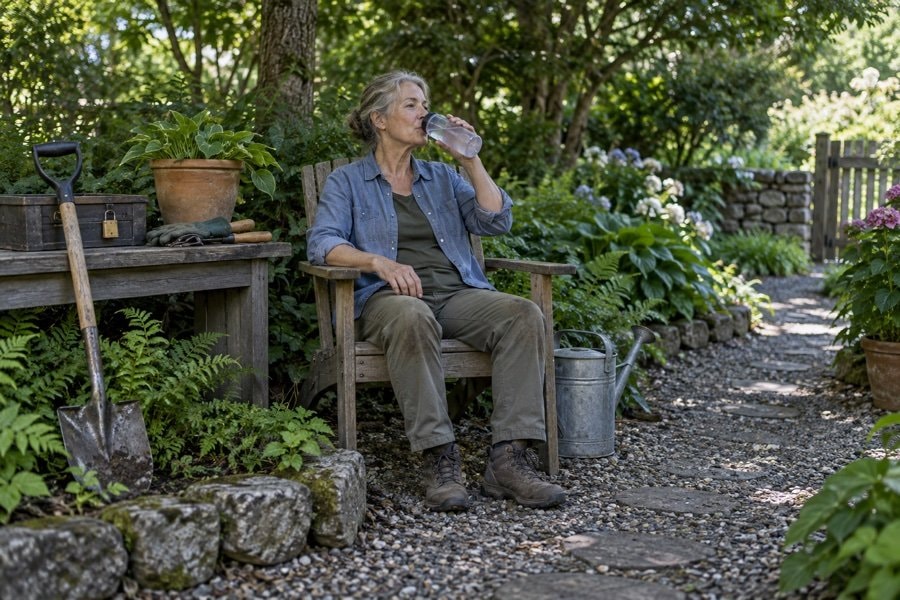
A heavy work session is not finished when the last shovel stops. A deliberate closeout protects tools, clears hazards and helps you judge tomorrow's plan honestly.
Stop Before You Are Spent
End the demanding part while you can still move and think with control. The final barrow, pot or branch pile can wait. Fatigue changes grip, footing and judgment, which makes rushed cleanup another high-load task.
Use the stopping point chosen in the pacing plan. If the work expanded unexpectedly, protect only essentials such as closing a gate, moving blades out of paths and securing water.
Shift Down Gradually
Walk easily for a few minutes, put light hand tools onto the bench and let breathing return toward its usual pace. Avoid dropping straight into a low chair if standing again will be difficult. In hot conditions, move to shade or a cool indoor place promptly.
Gentle, comfortable movements are enough; do not force a deep stretch into a tired or painful area. This is a transition out of work, not a test of flexibility.
Drink and Cool Down
Keep water accessible and drink during the workday rather than trying to catch up only at the end. The public-health heat recommendations emphasize accessible water, rest breaks and recovery in a cool place. Use the fuller garden plan in heat, hydration and sun safety.
Change out of wet clothing and continue cooling in a comfortable place. If confusion, fainting, loss of consciousness or other signs of possible heat illness occur, get urgent help rather than treating the situation as ordinary fatigue.
Make Cleanup Low Effort
Brush soil from tools at bench height, lock blades and store them dry. Leave deep sharpening or repairs for another day if hand control is tired. Coil only enough hose to remove a tripping hazard, using broad loops rather than fighting tight twists.
Stage unfinished material safely: cover a soil pile, chock a cart and stack branches away from paths. A five-minute safety cleanup is different from insisting that the entire site look finished.
Record What the Work Cost
Note the task, approximate work blocks, weather and which motion became tiring first. This does not require a medical interpretation. It is practical information for choosing load size, tools and timing next time.
If carrying was the limit, place materials closer. If kneeling dominated, use the alternatives in knees and kneeling. If grip faded, sharpen or change the cutting tool. The next plan should respond to evidence.
What Recovery Research Looks At
Rest, food, water and sleep remain the practical answer after an ordinary hard day. A gradual return starts with manageable work and changes of task, instead of repeating the heaviest job immediately. The NIAMS guide to sports injuries covers diagnosis, treatment and steps to take when an injury is involved.
MOTS-c is a mitochondrially encoded peptide studied in exercise-metabolism research. It is sold as research-use-only material in the MOTS-c research listing at Oath Peptides. These are laboratory research materials, not products for personal use. Oath publishes third-party certificates of analysis (COAs) for every batch.
Know When Rest Is Not the Whole Answer
Sudden severe pain, pain after a fall, chest pain, fainting, confusion, new numbness or weakness, or symptoms that are worsening require prompt professional attention. Contact an appropriate clinician or emergency service. Persistent symptoms also deserve guidance from your own clinician before returning to heavy garden work.
For an ordinary demanding day, eat normally, rest, sleep and return only when the next task can be done with control. Skip the idea of making up lost time. A garden season is a chain of workable days, and the best closeout preserves the next link.
A Small, Useful Trial
After one demanding session, make a low-effort closeout list: cool down, drink water, secure hazards and record unfinished work. Note which task or weather condition most affected control. On the next comparable day, shorten that block or change the equipment before starting. Judge the revision by the quality of the final minutes, not only the amount completed.
Create a closeout station near the exit with water, a seat, a place for muddy footwear and secure storage for sharp hand tools. Keep a short priority order there: make the site safe, account for tools, note unfinished irrigation or open gates, then leave cosmetic cleanup for later. Review the previous work block only after cooling down. If control faded near the end, shorten that block or move the heaviest task earlier on the next comparable day.
Leave a Safe Site
When energy is low, secure sharp tools, open gates, hoses and unstable loads first. Cosmetic cleanup can wait.
Leave a written restart point before walking away: the next row, the valve that remains closed or the load that still needs help. This prevents the following session from beginning with a rushed reconstruction of unfinished work. If weather can affect the open task, add a specific check to the next garden round. Clear information is part of a safe closeout, especially when more than one person uses the space.