Houseplant Care: Light, Water and Repotting Basics
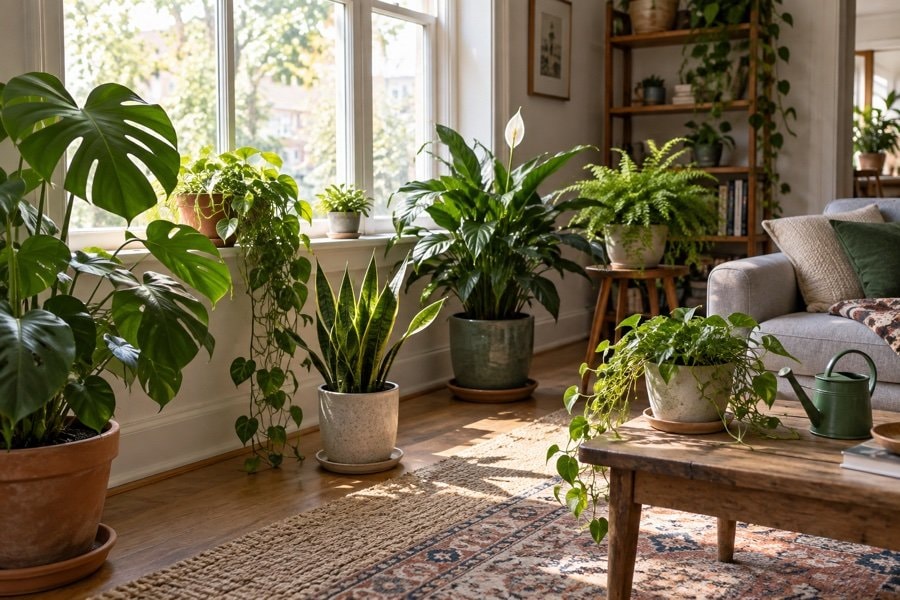
Houseplant care becomes simpler when you respond to the plant and room rather than a fixed calendar. Light sets the pace; water, growth and maintenance follow from it.
Read the Available Light
Window direction, outdoor shade, distance from glass and season all change indoor light. Watch where direct sun falls and for how long. A plant several feet from a bright window may receive far less usable light than it appears to the human eye.
Match plants to stable positions and rotate pots gradually for even growth. Sudden moves from dim rooms into intense sun can scorch leaves. If a plant stretches, leans or makes smaller new leaves, reassess light before reaching for fertilizer.
Water the Root Ball Thoroughly
Check moisture below the surface with a finger, wooden skewer or the pot's weight. When the plant needs water, apply enough to moisten the full root ball and let excess drain. Empty standing water from saucers so roots are not left submerged.
Different plants and potting mixes dry at different rates. Temperature, humidity, leaf area and season also matter. A weekly appointment can be a reminder to check, but it should not be an automatic instruction to pour.
Use Containers With Drainage
Drainage holes provide a margin against excess water and make thorough watering possible. Decorative outer pots can hide a draining nursery pot, but remove it for watering and return it only after dripping stops. Protect furniture while preserving airflow beneath containers.
Choose a potting mix suited to the plant's root needs. Garden soil is usually too dense for indoor containers and may carry pests. Pot size should increase modestly; an oversized volume stays wet longer than a compact root system can use.
Repot for a Clear Reason
Repot when roots circle densely, water runs straight through a shrunken root ball, the mix has broken down or the plant is unstable. A root visible at one drainage hole does not automatically mean an emergency. Many plants tolerate slightly snug roots.
Water ahead if appropriate, slide the root ball out gently and loosen only tight outer roots. Replant at the same depth unless the species needs otherwise. Delay heavy feeding while disturbed roots settle, and keep the plant out of unusually harsh light for a short adjustment period.
Inspect Before Problems Spread
Look at leaf undersides, stem joints and new growth whenever you water. Sticky residue, pale stippling, cottony clusters or webbing can signal pests. Isolate an affected plant while identifying the cause, and clean fallen leaves from the soil surface.
Quarantine new plants away from the main collection for an observation period. Wash pruning tools between suspicious plants. The general diagnostic habits in plant disease prevention apply indoors too: change one condition at a time and watch the pattern.
Adjust With the Seasons
Winter light can slow growth even in a warm room, so many plants use water less quickly. Heating vents create drying drafts while cold glass can chill foliage. In summer, stronger sun may shift across the room. Recheck positions rather than assuming the indoor environment is constant.
Group care notes by location in a garden journal. Record repotting, flowering, pest issues and seasonal watering changes. For starting an indoor growing area from scratch, combine these habits with indoor gardening fundamentals. Observation turns a roomful of individual plants into a manageable routine.
A Small, Useful Trial
Choose two similar plants in different window positions. For four weeks, check moisture on the same days but water only when each root ball needs it. Record pot weight, drying time and new growth. This separates the inspection schedule from the watering schedule and demonstrates how light and position change water use indoors.
Add each plant’s container size, potting mix and distance from the window to the record. When watering is needed, note how evenly the root ball accepts water and whether excess drains promptly. If one plant dries much faster, inspect roots, airflow and sun exposure before changing the calendar. Turn the observation into a room-based routine: check the brightest, warmest locations first, then the cooler shelves. That order follows actual drying conditions instead of treating every pot alike.
Check, Then Water
Use a calendar to inspect houseplants, not to water them automatically. Moisture in the root zone makes the decision.