Winter Sowing Seeds in Outdoor Containers
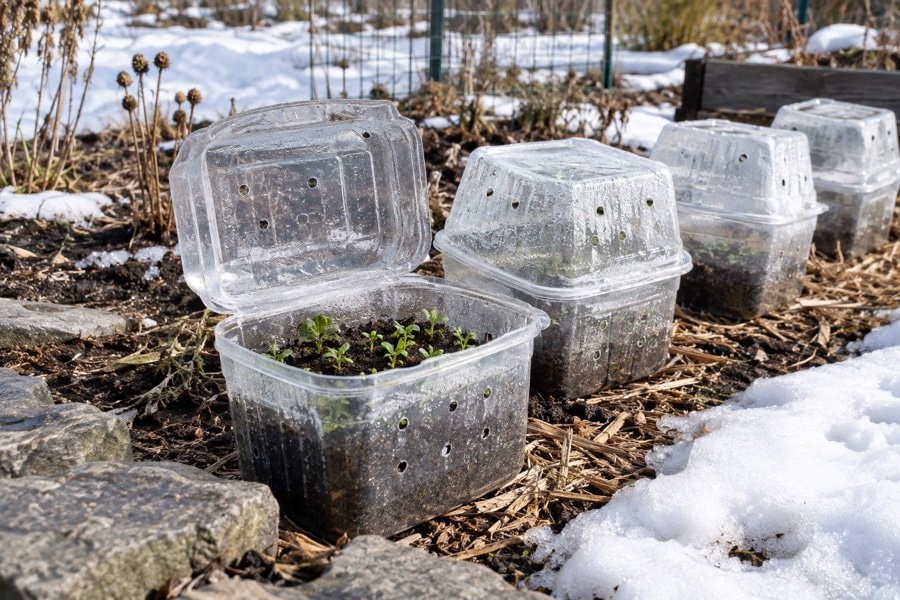
Winter sowing uses a covered, vented container outdoors as a small protected seedbed. Weather provides cold exposure and seedlings emerge when conditions begin to suit them.
Choose Suitable Seeds
Cold-tolerant perennials, hardy annuals and cool-season vegetables are the easiest candidates. Seed descriptions that mention cold stratification, fall sowing or self-sowing offer useful clues. Tender warm-season plants may emerge too early in a sunny container and are usually better handled with controlled indoor starting.
Check local timing because winter means different conditions in different regions. Where winters are mild, seeds needing prolonged cold may require a different method. Where containers remain deeply frozen for months, sowing too early can expose seed to long periods of saturation.
Prepare a Safe Container
Use a translucent container deep enough for potting mix and roots. Create ample drainage holes below and ventilation above. The lid must admit rain and air while staying secure in wind. Avoid containers that held hazardous materials, and smooth or cover sharp cut edges.
Add premoistened seed-starting or potting mix rather than dense garden soil. Fill enough depth that the container does not dry immediately, firm gently and let excess water drain before sowing.
Sow and Label Clearly
Sow at the depth appropriate to the seed and avoid crowding the entire packet into one small space. Close the container and label it inside and outside with weather-resistant writing. Include the plant and sowing date.
Set containers outdoors where they receive weather but will not sit in runoff, fall from a ledge or be crushed by sliding snow. Morning sun with some protection from intense afternoon heating can make spring moisture easier to manage.
Monitor Without Fussing
During winter, make sure drainage remains open and lids stay attached. Snow and rain usually supply moisture, but sheltered containers may need checking. The mix should remain damp, not waterlogged.
As days warm, inspect more often. A closed container can heat quickly in sun. Increase ventilation on mild days and close it again for severe cold or wind as seedlings require. Water gently from below or along the edge when the mix begins to dry.
Thin and Harden Seedlings
Even outdoor-sown seedlings need gradual adjustment once the container is opened widely. Increase exposure over several days and protect from abrupt freezes. Thin crowded seedlings early so roots and stems develop with air around them.
Transplant when seedlings have usable roots and the destination bed is ready. Lift small clusters or individual plants with a label. Water them in and provide temporary shade or wind protection if conditions turn harsh.
Compare With Indoor Starting
Winter sowing saves indoor shelf space and naturally exposes hardy plants to outdoor fluctuations. Indoor seed starting offers closer control and is often better for tender crops needing a long warm season. Many gardens benefit from both methods.
Record species, sowing date, first emergence and transplant success in a garden journal. If a container fails, consider seed age, drainage, moisture and local cold exposure before abandoning the method. A small labeled trial is the safest way to learn which plants suit your winter.
A Small, Useful Trial
Sow one hardy species in two labeled winter containers with identical mix and drainage but slightly different protected locations. Record first emergence, moisture, overheating and transplant success. Do not judge the method by germination alone; strong seedlings that transplant easily are the useful result. Keep the better location for next winter's larger batch.
Create a quick inspection order for the containers: label, lid security, top ventilation, bottom drainage, moisture and emergence. Check them in that order after wind, snowmelt and the first warm sunny days. Move only containers whose location creates a clear problem, because frequent changes make comparisons harder. When seedlings are transplanted, record the number that established rather than only the number that germinated. That final step shows which container setup produced useful garden plants.
Vent Top, Drain Bottom
A winter-sowing container needs both. Ventilation prevents overheating, while drainage keeps melting snow and rain from saturating the seedbed.
Prepare a transplant destination before opening a container full of seedlings. Water the bed, place labels and clear the carrying route first. Move one container at a time and keep the remaining lids secure. If weather turns harsh, the unopened containers remain protected while only a manageable group needs attention. This order prevents a promising batch from becoming an urgent, all-at-once planting job.