Beneficial Insects: Make the Garden Work as Habitat
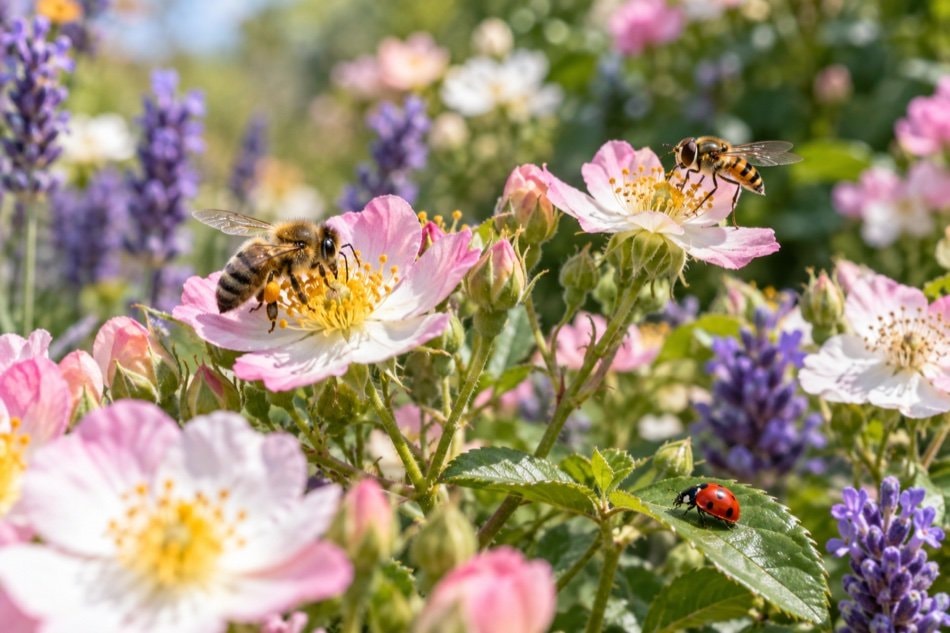
Beneficial insects pollinate flowers, consume garden pests and help recycle organic material. Supporting them begins with habitat and accurate identification, not with buying insects to release.
Learn the Jobs Insects Do
Bees, flies, beetles, moths and butterflies move pollen among flowers. Lady beetles, lacewing larvae, some wasps and predatory bugs feed on other insects. Ground beetles and decomposers work closer to the soil. An insect may be useful in one life stage and unfamiliar in another, so avoid judging every larva by appearance.
Start by photographing visitors and noting the plant, behavior and date. Use regional extension or natural-history identification resources rather than a single image match. Precise identification prevents helpful species from being removed by mistake.
Plant a Continuous Sequence of Flowers
Choose overlapping bloom times from early spring to frost. Include clusters of small open flowers as well as deeper forms, because insects vary in mouthpart length and body size. Plant several of each species together so a patch is easy to find and forage efficiently.
Locally adapted native plants are an excellent backbone, alongside noninvasive herbs and annual flowers where appropriate. Allow some herbs and vegetables to flower. A row of dill, cilantro or radish that bolts can become a busy feeding station rather than an immediate failure.
Provide Nesting and Overwintering Places
Leave some bare, well-drained soil for ground-nesting bees and retain hollow or pithy stems in a quiet corner. Delay cutting all perennial stems to the ground until conditions warm and occupants can emerge. Keep a modest leaf layer beneath shrubs where it will not block drainage.
Artificial nesting structures require correct dimensions, weather protection and regular cleaning; neglected cavities can concentrate parasites and disease. Habitat spread throughout the garden is often easier to maintain than a single crowded structure.
Offer Water Safely
A shallow dish with pebbles can provide landing surfaces. Refresh it frequently so it stays clean and does not become mosquito habitat. Moist soil and dew may supply enough water in some gardens, so observe actual use before adding multiple stations.
Avoid sticky traps in open habitat areas because they catch unintended insects. Outdoor lighting also changes insect behavior; direct essential light downward and switch it off when it is not needed.
Use Targeted Pest Decisions
Inspect plants closely before treating damage. Look beneath leaves, compare affected and unaffected plants and identify both pest and predator. A few aphids may support predators without meaningfully harming a vigorous plant. Wait and monitor when damage is limited.
If action is needed, begin with barriers, pruning a small infested tip or a directed water spray when appropriate. Follow the broader decision sequence in organic pest control. Even low-toxicity controls can harm non-target insects when applied broadly or onto open flowers.
Measure Habitat, Not Perfection
Track first bloom, last bloom, bare periods and observed visitors in a garden journal. Add plants to bridge weeks when few flowers are open. Leave a small amount of prey and imperfection so the food web can function.
Connect the insect plan to a larger wildlife-friendly garden. Birds need insects for food, stems provide winter shelter and clean water serves many species. A resilient garden is not insect-free; it contains enough relationships to keep most damage within tolerable bounds.
A Small, Useful Trial
Choose one flowering patch and record every insect visitor you can distinguish during a ten-minute period each week. Note whether it visits flowers, hunts on leaves or rests on stems. Add a plant that fills the longest bloom gap and leave one safe overwintering pocket. Compare activity before deciding that a purchased habitat feature is necessary.
Photograph unfamiliar visitors from several angles without handling them, including the plant part and any nearby prey or damage. Compare observations across morning and afternoon before assigning a role. If one plant consistently hosts hunters as well as pests, leave a portion untreated while monitoring the crop. Record bloom gaps and mowing or cleanup dates too. The goal is a garden record that distinguishes a passing flower visitor from an insect completing a useful part of its life cycle there.
Identify Before You Act
When you find an unfamiliar insect, record its behavior and host plant. Feeding on another insect tells a very different story from feeding on the leaf.