Growing Garlic From Planting to Curing
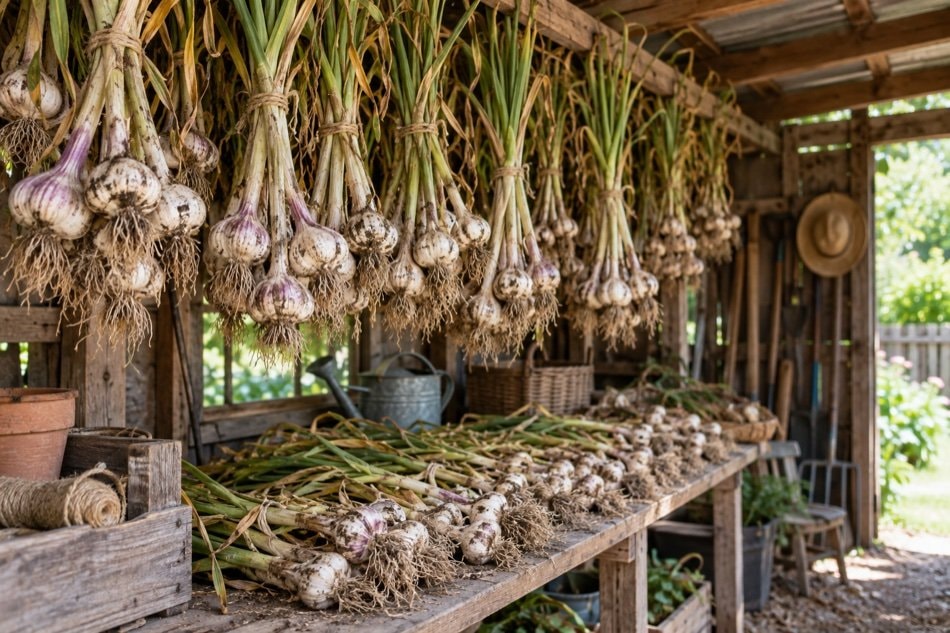
Garlic occupies the garden for many months but asks for only a few well-timed decisions. Healthy planting cloves, good drainage and patient curing matter more than constant attention.
Choose Garlic for Your Climate
Garlic types differ in cold tolerance, clove arrangement, storage life and whether they produce a central flower stalk. Choose planting stock suited to regional winters and the intended use. Plant sound, firm cloves reserved for growing rather than relying on grocery bulbs of uncertain adaptation or treatment.
Select a bed with full sun and free drainage. Garlic dislikes prolonged saturation, especially during cool weather. Review soil test results before adding nutrients and avoid fresh, undecomposed material around planting cloves.
Plant at the Right Seasonal Window
In many cool climates, garlic is planted in fall so roots establish before winter and shoots resume in spring. Milder regions may use a different window. Local planting calendars are important because too-early growth can be exposed, while very late cloves may not root well before the soil cools.
Separate bulbs shortly before planting so clove bases do not dry. Set each clove upright with the pointed end up, at a consistent depth and enough spacing for bulbs to expand. Label varieties at both ends of the row.
Mulch and Monitor
A loose mulch can buffer winter temperature and suppress weeds. Pull it back slightly if heavy, matted material keeps spring soil cold and wet. Keep beds weeded because garlic's narrow leaves do not shade competitors strongly.
Water during active growth when soil beneath the mulch begins to dry, then reduce irrigation as bulbs approach maturity. Uneven moisture can complicate bulb development, but constantly wet soil invites decay. The garden watering guide explains how to check the root zone rather than relying on the surface.
Handle Flower Stalks Deliberately
Hardneck types commonly send up curling flower stalks. Removing them while tender directs the plant away from flowering and also provides an edible harvest. Cut rather than yanking so the leaves and bulb are not loosened.
Leave a few stalks if you want a visual maturity cue or to observe the plant's full cycle. Record which rows were cut and compare bulb size at harvest. Garden practices become more useful when small trials replace assumptions.
Read the Harvest Cues
Garlic is usually ready after several lower leaves have browned while upper leaves remain green. Do not wait until every leaf dies, because the wrappers protecting the bulb can break down. Loosen soil beside the row with a fork and lift from below instead of pulling hard on the stem.
Handle fresh bulbs gently; bruises reduce storage quality. Do not wash them before drying. Brush off only loose soil and keep leaves attached while the bulb dries in a shaded, airy, rain-protected place.
Dry and Store
Spread or hang plants with good air circulation, keeping them out of direct sun. Once necks and outer wrappers are thoroughly dry, trim roots and tops as appropriate for the type. Set aside damaged bulbs for early use and never store soft or moldy ones with sound bulbs.
Keep dried garlic in a cool, dry, well-ventilated location and inspect it periodically. Save the healthiest, best-adapted bulbs for the next planting or follow the selection principles in seed saving. A clear label through drying prevents favorite strains from becoming anonymous.
A Small, Useful Trial
At planting, label two short rows of the same garlic and vary only spacing within a sensible range. Give both rows identical soil care, mulch and water. Record spring emergence, flower-stalk timing, harvest date and dried bulb size. Save planting cloves from the healthier group while remembering that one season's weather can influence the comparison.
At harvest, lift a few labeled plants first and inspect wrapper development before clearing the row. Keep the two spacing groups separate through curing, because fresh bulb size alone does not show storage quality. After drying, record intact wrappers, neck dryness and any damaged bulbs that should be used first. Select sound planting cloves from the group that performed reliably, and keep their label attached all the way to autumn planting.
Dry in Shade
Harvest is only half the job. Give lifted garlic steady airflow and protection from sun and rain until the neck and wrappers are dry.