Growing Onions: Timing, Bulbing and Storage
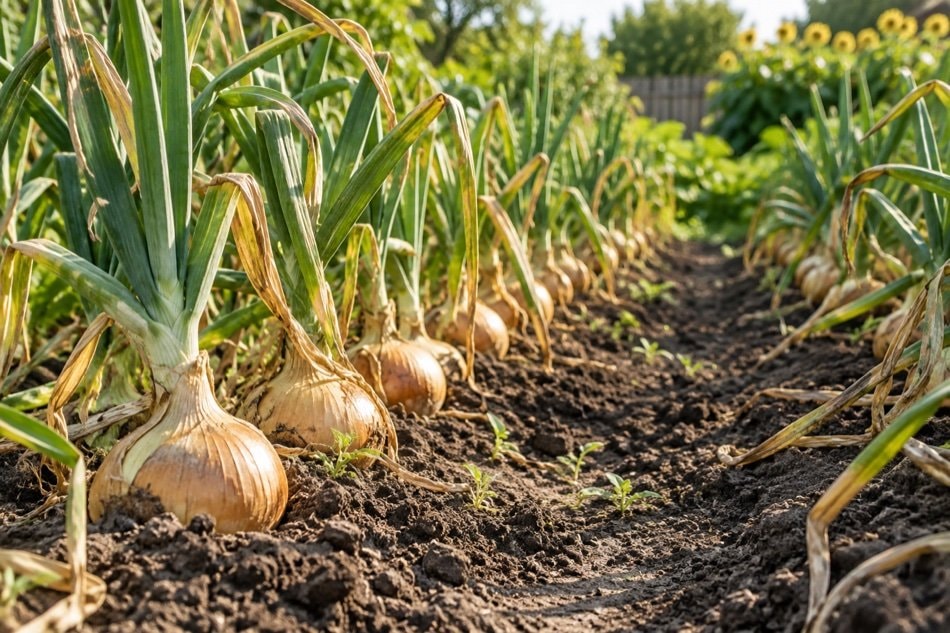
Onions are shaped by day length as well as temperature. Choosing an adapted type and building strong leaf growth before bulbing are the foundations of a good harvest.
Match the Type to Day Length
Bulbing begins when a variety experiences its required day length. Types suited to northern summers differ from those adapted to lower latitudes, with intermediate choices between them. A poorly matched onion may make abundant leaves but a small bulb, regardless of careful feeding.
Choose storage, sweet or bunching types according to how you plan to use them. Storage potential varies, so do not expect every mild, juicy bulb to last through winter. Local planting guidance is valuable when selecting a type.
Start With Seed, Transplants or Sets
Seed offers the widest choice and can produce strong plants when started early enough. Transplants shorten the indoor phase. Sets are convenient but may bolt if they are oversized or exposed to stressful temperature changes. Whichever route you use, select healthy material and keep roots from drying before planting.
Plant shallowly in a sunny, well-drained bed. Give bulb onions room to expand, or plant closer and harvest every other plant as a green onion. Firm soil around roots without burying the growing point deeply.
Build Leaves Before Bulbs
Each healthy leaf contributes to the bulb's structure, so steady early growth matters. Use a soil test to guide fertility and avoid late, heavy additions that keep tops growing after bulbs should mature. Onions have relatively shallow roots and respond poorly to severe competition.
Weed with shallow strokes to avoid cutting roots. A fine mulch can suppress seedlings once the soil has warmed, but keep it loose around the neck. Visit weed management for a low-disturbance routine.
Water Consistently, Then Taper
Check moisture within the root zone and water evenly through leaf growth and early bulbing. Wide swings between very dry and saturated soil stress plants. As tops begin to fall naturally and bulbs mature, reduce irrigation so necks and wrappers can dry.
Do not bend green tops to force maturity. Let the plant finish on its own schedule unless weather or disease requires an early harvest. Stop watering before lifting if conditions allow the bed surface to dry.
Watch for Bolting and Disease
A flower stalk rising from a bulb signals bolting. That onion will not store well, so harvest it for early use. Remove decaying plants promptly and improve spacing or watering if foliage stays wet for long periods. Rotate onions and their relatives away from the same ground when possible.
Inspect thrips damage and leaf diseases rather than assuming every pale tip is a nutrient problem. Wind, frost and uneven moisture can also mark foliage. The diagnostic approach in plant disease prevention helps separate patterns.
Harvest, Dry and Sort
When most tops have fallen and begun to dry, loosen bulbs carefully and move them to a sheltered, airy drying place. Keep them dry and out of intense direct sun. Allow necks and outer skins to dry fully before trimming.
Sort after drying. Use thick-necked, damaged or bolted bulbs first, and store only firm, dry bulbs with tight skins. Keep them cool with good air movement and inspect periodically. Pair the crop with garlic in the garden plan, but maintain distinct labels because their harvest cues and storage behavior differ.
A Small, Useful Trial
Plant one adapted onion type at two spacings, labeling both sections clearly. Harvest alternate close-spaced plants early as green onions and allow the remainder to bulb. Compare final size, disease, drying and storage rather than judging only leaf growth. The trial can reveal whether space is better used for fewer storage bulbs or a sequence of two harvests.
Mark the date when each comparison row begins forming bulbs, then stop judging growth by leaf height alone. At harvest, cure and label the groups separately. Note neck closure, damaged bulbs and how many remain sound at regular storage checks. Spacing that produces the largest bulb is not necessarily the most useful if curing is uneven or the household prefers a different size. Let the full sequence from transplant to storage guide next season’s plan.
Day Length Leads the Plan
Choose an onion type adapted to your latitude before fine-tuning spacing or feeding. Bulbing cannot be scheduled by calendar alone.