Growing Potatoes in Garden Beds and Containers
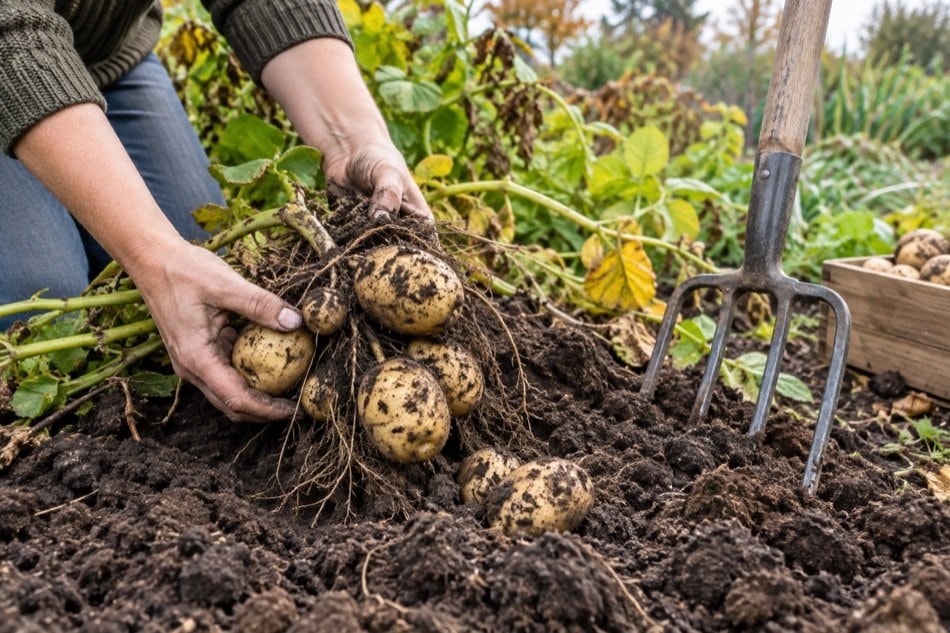
Potatoes form on underground stems above the original seed piece. Loose soil, steady moisture and protection from light help those developing tubers reach harvest in good condition.
Begin With Healthy Seed Tubers
Use certified disease-free seed tubers suited to your climate and desired harvest window. Small pieces need at least one strong eye and time for cut surfaces to dry before planting. Discard pieces showing soft decay or suspicious lesions rather than risking the whole row.
Choose a sunny bed with loose, well-drained soil. Potatoes share a family with tomatoes, peppers and eggplants, so include them together on the crop rotation map.
Plant Into Moist, Workable Soil
Wait until soil is workable and no longer waterlogged. Space seed pieces consistently in a shallow trench or individual holes, with eyes facing generally upward. Cover them and mark the row clearly so emerging shoots are not mistaken for weeds.
Containers can work when they are wide, stable and well drained. Fill them with a consistent growing mix rather than dense garden soil. Large containers become extremely heavy when wet, so place them before filling and review lifting and moving techniques.
Hill in Stages
As shoots grow, draw loose soil around the stems while leaving enough foliage exposed to keep growing. Repeat gradually rather than burying the plant in one operation. Hilling protects shallow tubers from sunlight and expands the covered stem zone.
Straw or another loose mulch can cover soil, but monitor moisture and rodents. Whatever material is used, keep developing tubers completely covered. Tubers exposed to light turn green and should not be eaten.
Keep Moisture Steady
Potatoes need consistent water, particularly as tubers form and enlarge. Check soil below the surface and water deeply enough to reach the root zone without leaving it saturated. Uneven moisture can result in misshapen growth or cracking.
Water near the soil and early enough for foliage to dry. If leaves remain wet frequently or disease appears, improve spacing and avoid moving through wet plants. See plant disease prevention for sanitation and observation practices.
Scout for Pests and Decline
Inspect leaf undersides and stems regularly. Hand removal can manage small beetle or egg clusters when identification is certain. Wilting in wet soil, dark stem lesions or rapid collapse deserve closer investigation; do not assume thirsty leaves always need more water.
Remove volunteer potatoes in following seasons if rotation is being used to interrupt pests or disease. Clean harvest tools and do not compost badly diseased tubers unless the composting process is known to handle that material safely.
Harvest for New or Storage Potatoes
For tender new potatoes, carefully feel beside a plant after flowering and remove only a few. For a storage crop, wait until vines have died back and skins have set. Stop irrigation ahead of harvest when weather permits, then loosen the bed from outside the hill to reduce fork damage.
Keep harvested potatoes out of sunlight. Let surface moisture dry in a dark, airy place, sort out damaged tubers and store sound ones under cool, dark, ventilated conditions. Check them often and remove any that soften or decay. The broader harvest and storage guide helps coordinate the rest of the crop season.
A Small, Useful Trial
Plant the same seed lot in one short ground row and one correctly sized container, using comparable sun and watering attention. Record planting material, hilling dates, irrigation and harvest weight, but also note labor, pest access and tuber damage. A method that yields slightly less may still be valuable if harvest is cleaner and easier.
Harvest the ground row and container into separate trays on the same day. Sort out damaged tubers before weighing, then note how much digging, lifting and soil sorting each method required. Check the emptied soil for overlooked tubers and record where pests or rot appeared. Store only sound, undamaged potatoes under appropriate conditions. The comparison should include usable harvest, space, water and work—not yield alone—before assigning next year’s bed area.
Keep Tubers Covered
Check hills after strong rain and as stems expand. Replace washed soil or mulch before any tubers are exposed to light.
Before plants close the rows, decide where hilling material will come from and how it will reach the bed. Stage loose soil or mulch so each addition requires short, controlled movements rather than repeated long carries. Check after heavy rain for exposed tubers and eroded hills. Early route planning makes the recurring hilling job easier and helps keep the growing area evenly covered.