Back Care When Digging, Lifting and Hauling
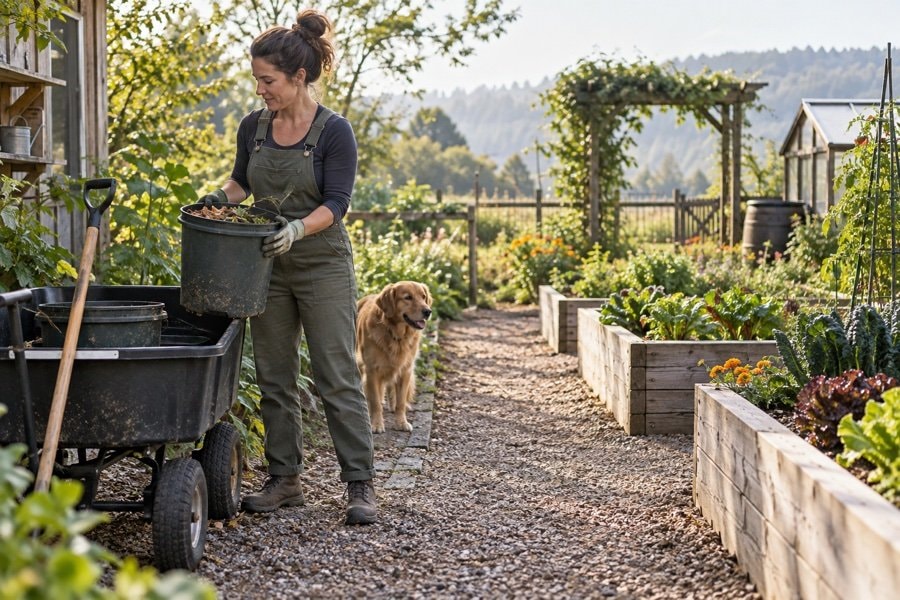
Compost bags, wet pots and soil-filled wheelbarrows are awkward loads. The safest improvement is often to reduce, divide or move the load mechanically before lifting it at all.
Reduce the Load at the Source
Have bulk material placed near the beds on a stable surface. Divide bags before moving them, carry half-filled buckets and choose a smaller watering can for distant areas. A second trip is usually a better trade than one unstable carry that blocks your view.
The public-health guidance on ergonomic risk factors highlights lifting bulky loads, bending, twisting and forceful movement. Garden layouts can reduce all four by shortening routes and creating room to turn with the feet.
Set Your Feet Before You Lift
Approach the object closely, clear the route and place feet on firm, level ground. Test the load by tipping one edge. If it shifts, sloshes or feels uncertain, stop and divide it or use a cart. A wet container may weigh far more than expected.
Face the load, bend through hips and knees as comfortable, keep it close and rise without a sudden jerk. Turn by stepping rather than twisting the trunk while the feet stay planted. Set down with the same deliberate sequence.
Use Tools to Move Material
A two-wheeled cart is stable for loose material; a wheelbarrow can pass through narrower paths but requires more balancing. Load weight over the wheel or axle, keep the route smooth and make several lighter trips. Park across a slope, not pointing down it, before loading or unloading.
Slide heavy pots onto a plant dolly or lever them onto a low cart rather than hugging and carrying them. Use ramps only when they are strong, wide, secured and not too steep. Ask another person for help when an object is bulky even if it is not especially heavy.
Dig With the Tool, Not Momentum
Choose a handle length that allows an upright stance. Place the blade where you want the cut, press with a foot while holding the handle steady and take small bites. Prune roots deliberately rather than bouncing on the tool or throwing body weight against it.
Alternate the leading foot and direction. Move excavated soil a short distance instead of flinging it to the far side of the bed. Sharp, clean edges reduce force; the tool ergonomics guide explains how to assess handles and maintain blades.
Break Up the Work
Dig for a short block, then switch to a different motion such as labeling, watering or spreading a light layer. Stop before technique deteriorates. Fatigue often appears as a rounded reach, a widening swing or a wheelbarrow loaded more heavily to finish faster.
Use no-dig gardening where it suits the soil and crops to reduce routine bed turning. Permanent paths and on-site compost also remove repeated handling from future seasons.
Know When to Stop
Sudden or severe back pain, pain after a fall, or symptoms accompanied by new numbness, weakness or changes in bladder or bowel control need prompt medical attention. Stop gardening and contact an appropriate clinician or emergency service. Persistent or worsening pain also deserves advice from your own clinician rather than a change in shovel technique alone.
For ordinary heavy-work planning, keep loads smaller, routes clear and the object close. Finish with the practical closeout in after a heavy garden day. The garden can wait; a rushed final load is rarely the one that matters.
A Small, Useful Trial
Move the same total volume of dry material using several smaller loads and a cart, without racing. Count lifts, note the route and observe when technique begins to change. Then relocate the staging point to remove one transfer. The goal is not to prove which method is fastest in a single run, but to find a repeatable load and route that preserve control.
Mark three staging zones: where the material arrives, where smaller loads are prepared and where they are used. Each zone should have firm footing and enough room to face the load and step through a turn. Remove any transfer that exists only because a bag, cart or empty pot was stored in the wrong place. For recurring deliveries, save the route and load plan with the order notes. Good handling begins before the material reaches the ground.
Test Before You Commit
Tilt one edge of a bag or pot before lifting. If the weight or balance surprises you, divide the contents or use a moving aid.