Rainwater Harvesting for the Home Garden
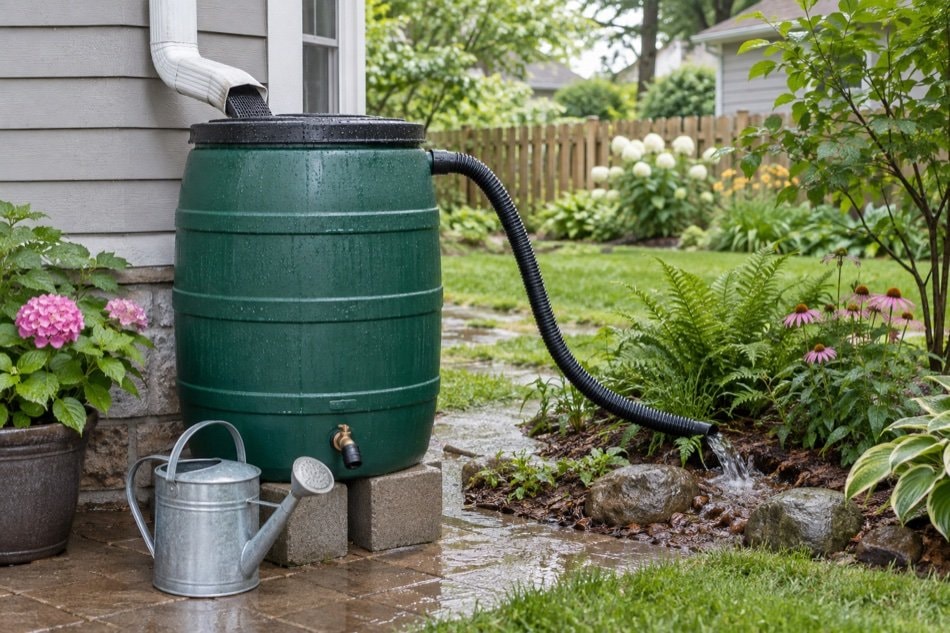
Rainwater harvesting can turn a roof and a storm into a useful garden reserve. The system succeeds when collection, storage, overflow and distribution are planned together.
Start With Local Rules and the Roof
Before adding a tank or barrel, check local water rules, building requirements and mosquito-control guidance. Consider the roof material and anything that may wash from it. Water collected from roofs with questionable coatings, heavy contamination or frequent animal traffic should not be assumed suitable for edible crops.
Clean gutters and use a leaf screen before water enters storage. A first-flush arrangement can divert the dirtiest initial runoff, but it requires regular emptying and maintenance. Keep the collection route simple enough to inspect from the ground.
Place Storage on a Stable Base
Water is heavy. Set a closed, sound container on a level base that will not settle, tip or undermine nearby structures. Secure it against accidental movement and keep access lids fastened. Open water invites debris, insects and safety hazards; every inlet and overflow opening should be screened appropriately.
Choose a location close to both the downspout and the plants that will use the water. Raising a small container can improve gravity flow, but the support must be designed for the full weight, not the empty container. If there is any doubt about a large installation, consult a qualified local professional.
Design the Overflow First
Storage fills quickly in a strong storm. The overflow needs a route at least as dependable as the original downspout. Direct it away from foundations, neighboring property and erosion-prone slopes. A broad, protected outlet can spread flow into a planted area where soil drains well.
Watch the system during rain. Look for gutter overtopping, leaks, a sinking base and concentrated discharge. Correct small erosion early with a stable outlet and vegetation rather than waiting for a channel to deepen.
Keep Stored Water Usable
Exclude light and debris to slow algae and keep the water cleaner. Inspect screens after storms, clear sediment as needed and prevent stagnant puddles around the base. In freezing climates, follow a winter plan that protects valves, hoses and containers from expansion damage.
Stored rainwater is garden water, not drinking water. Avoid creating fine sprays that can drift, and apply it near the root zone. For edible gardens, keep water off the harvestable portion when practical and wash produce with potable water before eating.
Distribute Water at a Useful Pace
A watering can is reliable for a small barrel and makes the remaining supply visible. Gravity-fed hoses need sufficient height and may deliver slowly. Some drip components require more pressure than a simple barrel provides, so verify that the outlet and line can work together before laying a large network.
Prioritize new transplants, containers and valuable drought-sensitive plants when storage is limited. A barrel rarely supplies an entire garden through a long dry period. Combine it with mulch, soil improvement and the scheduling principles in garden watering.
Connect Harvesting With Drainage
Harvesting rain is also stormwater management. Reducing a downspout's peak flow can help, but only if overflow has a safe destination. Use the diagnostic steps in garden drainage before directing more water toward a low area.
Record the approximate time a full container lasts under normal use. That observation helps size future storage and reveals leaks. The best system is not necessarily the largest; it is the one you can keep screened, stable, clean and connected through every season.
A Small, Useful Trial
During one moderate storm, time how quickly the container fills and watch the entire overflow route without stepping onto unsafe ground. Mark leaks, splashing and erosion. Then use only the stored volume for a known group of containers and record how many normal watering rounds it supplies. That simple test connects roof collection with actual garden demand.
After the storm, mark the highest water level, inspect the inlet screen and follow the overflow all the way to its final landing point. Check nearby foundations, paths and neighboring ground for unintended flow. Before the next rain, empty enough capacity for the forecast and clear leaves without reaching from an unstable position. A short log of rainfall, stored volume used and overflow behavior will show whether the system needs more storage, less collection area or a safer discharge route.
Observe One Storm
Before installing storage, watch where the existing downspout sends water and where that flow goes next. The overflow must preserve or improve that route.