Garden Drainage: Diagnose Wet Beds Before You Dig
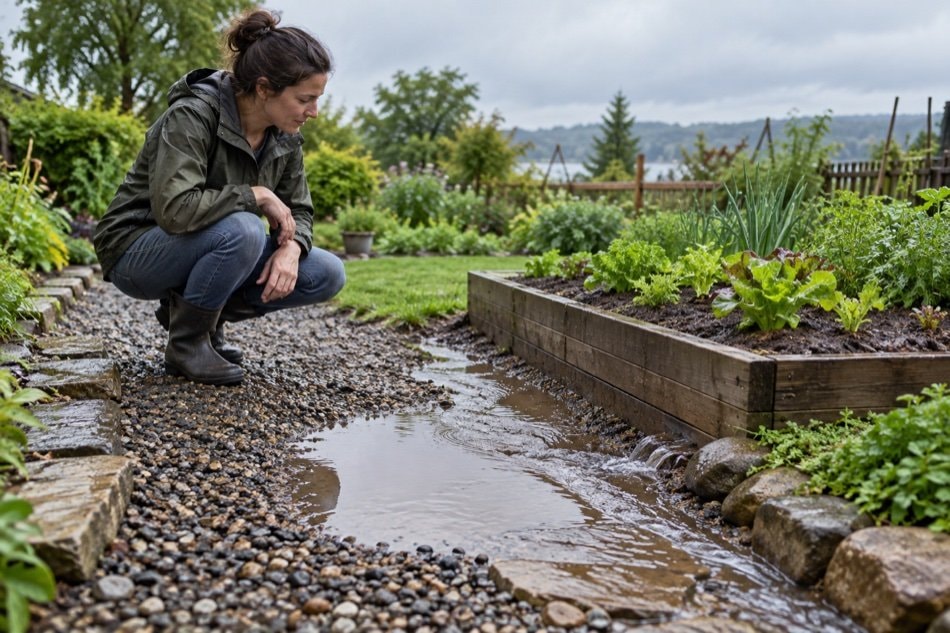
A wet garden can result from compacted soil, a low spot, a downspout, irrigation or a naturally high water table. The right fix depends on finding the source before moving soil.
Watch Water During Rain
Walk the property from a safe position during steady rain. Note roof runoff, slopes, path edges and water crossing from neighboring ground. Mark where flow slows, ponds or cuts channels. Repeat the observation after rain stops to see which areas drain within hours and which remain saturated.
Check irrigation separately. A leaking fitting or schedule that outpaces plant use can mimic poor natural drainage. Turn zones on one at a time and look for broken heads, blocked outlets and water landing on paving.
Distinguish Surface and Soil Problems
Surface runoff may need a gentler route, protective vegetation or a shallow contour that spreads rather than concentrates flow. Soil that stays saturated despite little visible runoff may be compacted, layered or naturally slow. Dig a small observation hole only where it is safe, and notice whether water enters from the sides or simply fails to leave.
Never direct water toward a building, septic area, public way or neighboring property. Underground utilities and local drainage rules can also constrain excavation. Seek qualified local help when a proposal involves deep trenches, structural foundations or large changes to grade.
Improve Beds From the Surface
Keep feet and machinery off wet soil. Create permanent paths and add organic matter based on soil need rather than trying to replace the soil's mineral texture. Roots and surface mulch can protect aggregates, while cover crops keep soil occupied between plantings.
Avoid adding a small pocket of sharply different material to a planting hole; it can hold water around roots. Prepare a broad bed consistently and select plants suited to the moisture pattern. If the bed stays wet, tolerant plants are often more reliable than repeated attempts to force dry-soil species.
Raise the Root Zone Carefully
A raised bed can lift roots above seasonal saturation, but it does not make incoming water disappear. Keep the structure clear of siding, confirm that overflow has a route and avoid damming water against the uphill edge. Fill should be stable, well blended and appropriate for the crops.
For a lower-effort layout, combine drainage planning with standing-height or seated access. The width should allow reach from outside so the new soil is not compacted by footsteps.
Use Swales and Drains With Caution
A shallow planted swale can slow and spread clean runoff on a suitable site. A subsurface drain may move water, but it needs a lawful outlet and can fail when installed without correct slope, filter materials or maintenance access. Neither feature should be improvised beside a foundation.
Before choosing either, estimate the contributing area and observe major storms. Small decorative channels can overflow when they receive roof-scale volumes. Direct the emergency overflow path deliberately.
Review the Whole Water Plan
Drainage and irrigation should be designed together. If a bed remains wet, shorten or skip scheduled watering and check moisture below mulch. If the property sheds water too fast, consider the safe storage and overflow principles in rainwater harvesting.
Photograph problem spots, draw arrows showing flow and record how long ponding persists. That evidence makes professional advice more useful and keeps you from repeating failed fixes. The goal is not to remove every drop quickly, but to keep roots, paths and structures within the moisture conditions they can handle.
A Small, Useful Trial
Place labeled stakes at the deepest edge of two puddling areas after rain and photograph them at fixed intervals from a safe path. Note whether water arrives from above, from a downspout or through the soil. Make one small reversible surface correction, then observe a comparable storm. Do not excavate a permanent drain until the outlet and downstream effect are understood.
Add the observations to a simple contour sketch showing high ground, low ground, roof discharge, paving and the proposed outlet. Revisit it during more than one rain, because a brief shower and saturated winter soil can produce different patterns. If the small correction moves water faster, inspect the new receiving area rather than declaring success at the original puddle. A drainage change is useful only when the full route remains stable, lawful and manageable.
Follow the Water Both Ways
For every wet spot, ask where the water came from and where a proposed fix will send it next.