Shoulder Strain and Overhead Garden Work
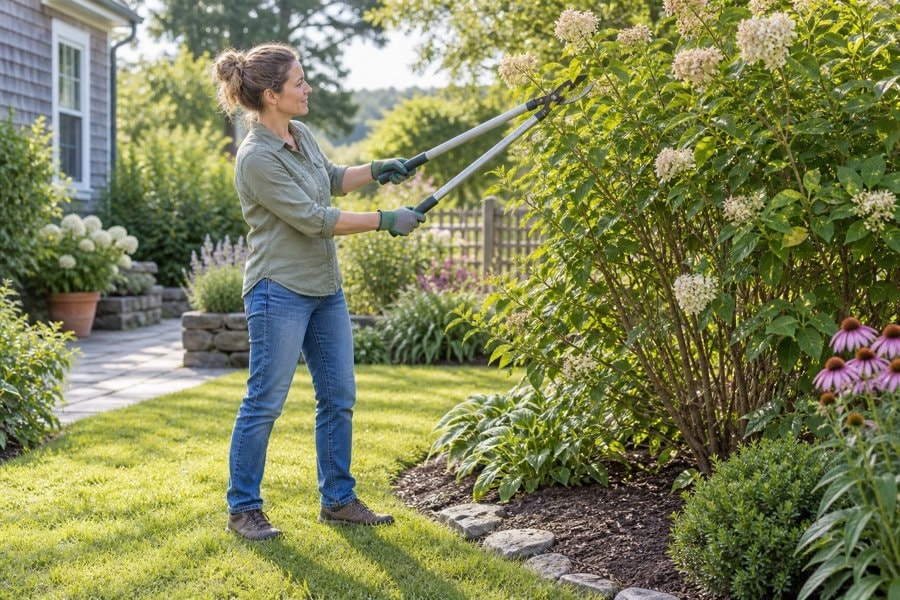
A task becomes harder when the elbows stay above shoulder height. Bring plants and tools into a comfortable work zone whenever the garden design allows it.
Recognize Overhead Exposure
Tree pruning is obvious overhead work, but hanging baskets, tall stakes, shed storage and vine training can create the same posture. Holding even a light object at arm's length increases the demand. The public-health ergonomics guidance identifies overhead work, force and awkward shoulder posture as risk factors to control.
List repeat overhead jobs and ask whether the plant, storage point or access method can move. A basket lowered by a secure pulley or a trellis kept within reach changes the task every day, not just once.
Work Below Shoulder Height
Use long-handled pruners from stable ground for small appropriate cuts, keeping the tool angle within its safe range. Bring containers to a bench for grooming. Store frequently used tools between knee and shoulder height instead of on a high shelf.
Move closer to the work rather than extending the arms. Reposition around a shrub and prune the near face in sections. Do not stretch across the center with the tool at full reach.
Use Stable Access
For reachable work that requires elevation, use a stable platform designed for the surface and task. Place it on firm, level ground, keep three points of contact while climbing and never stand on a bucket, chair or overturned pot. Do not lean sideways beyond the support; climb down and reposition.
Tree work near power lines, large limbs or heights belongs with a qualified professional. Long tools can conduct electricity and falling branches are difficult to predict. A home pruning guide is not a substitute for safe equipment and training.
Choose Lighter, Well-Balanced Tools
Compare tools in the posture where they will be used. A long handle may extend reach but also magnifies weight at the far end. Check whether the head feels controlled, the lock is reachable without a grip shift and the tool can be lowered safely.
Keep cutting edges sharp so the shoulder does not compensate for a dull blade. For hand controls and grip fit, see reducing hand and wrist load. A tool that solves reach but creates excessive grip is not a good fit.
Limit the Work Zone
Prune one panel of a hedge or train one section of vine, then switch to a waist-height task. Let the arms rest at the sides between cuts. Avoid long continuous passes with a powered tool held away from the body.
Use the work-block approach in pacing a garden day. Plan cleanup within the same block so cut branches do not create a tripping hazard for later.
Stop When Control Changes
Increasing pain, weakness, numbness or loss of smooth tool control is a reason to stop. Persistent symptoms or an injury after a fall should be discussed with your own clinician. If the task cannot be done while maintaining stable footing and controlled movement, change the setup or leave it for qualified help.
Reduce next season's overhead work through plant choice and pruning timing. Keep vines on reachable wires, select the mature size before planting and locate hanging containers where they can be lowered. The best solution is often horticultural: grow the plant in a form the gardener can maintain from the ground.
A Small, Useful Trial
Choose one vine or shrub section and mark the highest point that can be reached with relaxed shoulders from stable ground. Bring growth below that line through appropriate training or pruning over time. Record any work still requiring elevation and decide whether it can be lowered, approached differently or assigned to qualified help.
Draw the reachable working zone on a photograph of the plant or structure and use it when planning future training cuts. Tie new growth while it is flexible and place harvest points where they can be reached from stable ground. If part of the job remains above the zone, decide in advance whether it needs a different tool, a lower support or outside help. Do not let an unfinished branch turn a planned ground-level task into an improvised climb.
Lower the Work
Before extending a tool upward, ask whether the container, branch plan, storage hook or training wire can come down to you.