Ergonomic Garden Tools: Choose for Fit and Control
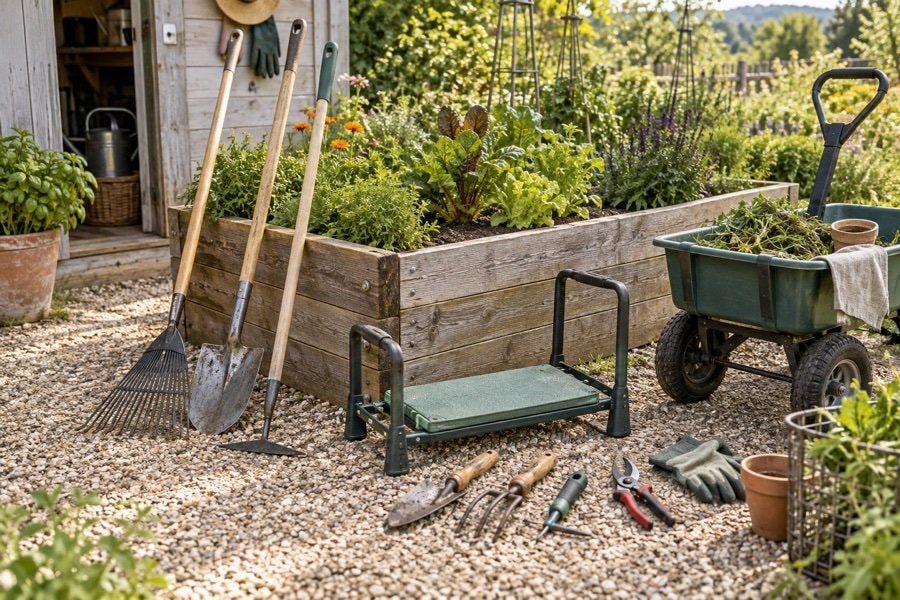
A tool is ergonomic only when it fits the gardener, the task and the working position. Labels matter less than how the handle, weight and control feel in actual use.
Start With the Task
Define the material, height and duration before choosing a tool. Cutting soft flower stems is different from pruning woody branches; loosening a container is different from breaking compacted ground. One universal tool usually forces compromise.
The public-health explanation of ergonomics centers on fitting tasks and equipment to people's capabilities. In the garden, that means changing the tool or method when force, repetition or posture becomes excessive.
Check Handle Length
A long handle can reduce bending, but one that is too long becomes hard to control in a narrow bed. Stand in the likely work position with shoulders relaxed. The tool should reach the soil without forcing a rounded back or raised shoulder.
For shovels and forks, confirm that foot placement and hand spacing feel stable. For hoes, make several slow strokes without scraping the ground. Adjustable handles can serve different tasks only if the locking mechanism stays secure.
Evaluate Grip and Controls
Hold the tool with the gloves you normally wear. A grip that is too narrow concentrates pressure; one that is too large prevents the fingers from closing comfortably. Textured surfaces can help, but sharp ridges and hard seams create new pressure points.
Open and close pruners several times. The lock should be reachable without awkward finger motions, the spring should reopen the handles and the span should suit the hand. Left-handed gardeners should check blade visibility and lock placement instead of assuming a symmetrical handle works equally well.
Judge Weight and Balance
Lift the tool into the position where it will be used and hold it briefly. A light tool with a heavy head can still pull on the wrist or shoulder. Longer tools amplify that effect. Choose the shortest reach that allows safe access.
For carts and wheelbarrows, test empty steering, handle height and tipping control. Then imagine the load on slopes and thresholds. Two wheels add stability, while one wheel may maneuver through tighter paths; the garden layout determines which advantage matters.
Maintain the Working Edge
Clean soil and sap after use, dry metal and store tools under cover. Sharpen only the existing bevel, using a stable setup and eye protection. Tighten loose handles and replace cracked ones. A dull edge converts a cutting job into a high-force squeezing or swinging job.
Keep maintenance supplies at a comfortable workbench rather than kneeling on a shed floor. Record major repairs and discard a tool that cannot be made structurally sound.
Test Before Committing
Borrow a tool or handle it in person when possible. Simulate the motion without a load, then try a short real task. A padded grip may feel comfortable for a minute but become slippery when wet; a clever mechanism may be difficult to clean.
Pair tool choice with task pacing and adaptive techniques. No handle can make unlimited repetition sensible. The right tool lowers the demand and leaves enough control to stop, reposition and work accurately.
A Small, Useful Trial
Take the tool used most often and evaluate it through one ten-minute task. Note wrist angle, grip pressure, handle height, balance and the moment control changes. Clean and sharpen it, then repeat on a comparable patch. If force remains high, borrow a different handle length or mechanism for a short comparison before replacing anything.
Compare tools on the same small patch only when each is designed for the job. Test pickup, transport, working motion, control and safe storage—not just how the handle feels in the aisle. Note whether added length improves posture but makes the head harder to place, or whether a light tool still needs excessive force because its edge is dull. Keep the tool that makes the complete task predictable, and return borrowed equipment clean with the result recorded.
Bring Your Gloves
Test grips and controls with the same gloves used in the garden. Fit, reach and friction can change noticeably.
Storage affects tool fit too. Hang long tools where the working end cannot fall into a walkway and where the handle can be lifted without an overhead reach. Keep frequently used hand tools between knee and shoulder height. A tool that is well suited to the job but difficult to retrieve or return creates an avoidable awkward motion at both ends of every work session.