No-Dig Gardening: Build Beds With Less Disturbance
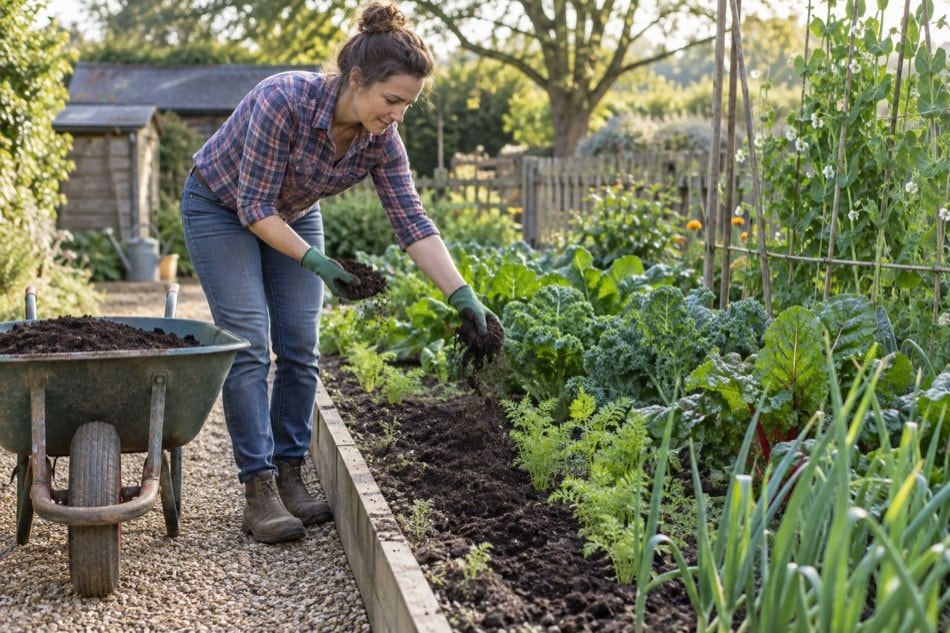
No-dig gardening keeps routine cultivation shallow and builds beds from the surface. It can reduce repeated turning while protecting the channels, roots and aggregates already present in the soil.
Understand What No-Dig Means
No-dig is not a promise that a spade will never enter the garden. You may still dig planting holes, remove a persistent root, install a post or correct a severe drainage problem. The central practice is to stop turning the entire bed every season. Organic material is applied on top, roots are left to decay in place when practical and feet stay on permanent paths.
This approach suits many vegetables and flowers, but it does not erase underlying limits. Compacted subsoil, construction debris and water flowing toward a foundation need diagnosis. Start with soil testing and a drainage check when the site's history is uncertain.
Convert an Existing Bed
Remove weeds that hold large food reserves in roots, and do not bury weeds carrying ripe seed. Cut annual growth at the surface, water dry soil and cover it with a moderate layer of finished compost. On weedy ground, plain overlapping cardboard can form a temporary light barrier beneath the compost, provided tape and labels are removed and edges overlap.
Do not build a deep mound against tree trunks, siding or wooden fences. Keep bed dimensions narrow enough to reach the middle from paths. A bed that requires stepping into it will soon lose one of the method's main advantages.
Plant Through Surface Layers
Transplants are straightforward: pull material aside, make a hole just large enough for the root ball and firm it in. For direct-sown rows, create a narrow band of fine compost or soil so small seeds have even contact and are not lost in coarse mulch. Water the row gently and mark both ends.
As residue settles, watch for slugs and other shelter-seeking pests. Thick wet layers around seedlings can create problems, so keep mulch clear of stems and adjust the depth to climate. Surface cover should protect soil, not smother crowns or keep a wet bed saturated.
Control Weeds While They Are Small
The easiest weed to remove is a thread-stage seedling. Use a shallow hoe on a dry surface or pull after rain when roots release cleanly. Avoid deep chopping that brings buried seed upward. Repeatedly cut persistent weeds before they rebuild their reserves, and trace spreading stems rather than scattering pieces.
Refill thin patches of surface material after weeding. Paths need their own plan: a durable mulch, living cover or firm surface prevents them from becoming a seed source. See weed management for strategies by weed type and location.
Feed the Bed According to Need
A light annual compost layer is common, but more is not always helpful. Compost contains nutrients, and repeated heavy additions can create imbalances. Use test results, crop performance and the material's maturity to decide whether the bed needs compost, mulch without much fertility, or no addition that season.
Leave healthy crop roots in place by cutting stems near the surface. Remove diseased material when it could carry problems forward. Cover crops can keep living roots in an open bed, though their termination should be planned before sowing.
Judge the Method Over Time
In the first season, focus on weed pressure, drainage and how easily transplants establish. Later, compare the bed's moisture, surface crusting and workability. A no-dig bed still needs irrigation, rotation and close observation; it simply organizes those jobs around less wholesale disturbance.
The physical saving can be significant because routine bed turning disappears, but bags and wheelbarrows still need careful handling. Move material in smaller loads and review safer digging and lifting techniques before a large conversion day.
A Small, Useful Trial
Convert only one reachable bed. Photograph its surface, count the main perennial weed patches and note how long preparation takes. Keep traffic outside, use measured surface material and direct-sow one row through a fine strip. At midseason, compare weeds, moisture and planting effort with a conventionally prepared bed growing a similar crop.
Keep one permanent access point and compare the bed after planting, heavy rain and harvest. Note whether the mulch stays on the surface, whether the planting holes remain workable and where perennial weeds return. Add material only where the soil surface is exposed or the crop plan requires it; a deeper layer is not automatically better. At season’s end, compare harvest effort, weed time and soil condition with a bed managed by the usual method.
Protect the Bed From Traffic
Permanent paths matter as much as surface compost. Size beds so planting, harvest and weeding can all happen from the edge.