Seated and Standing-Height Gardening Setups
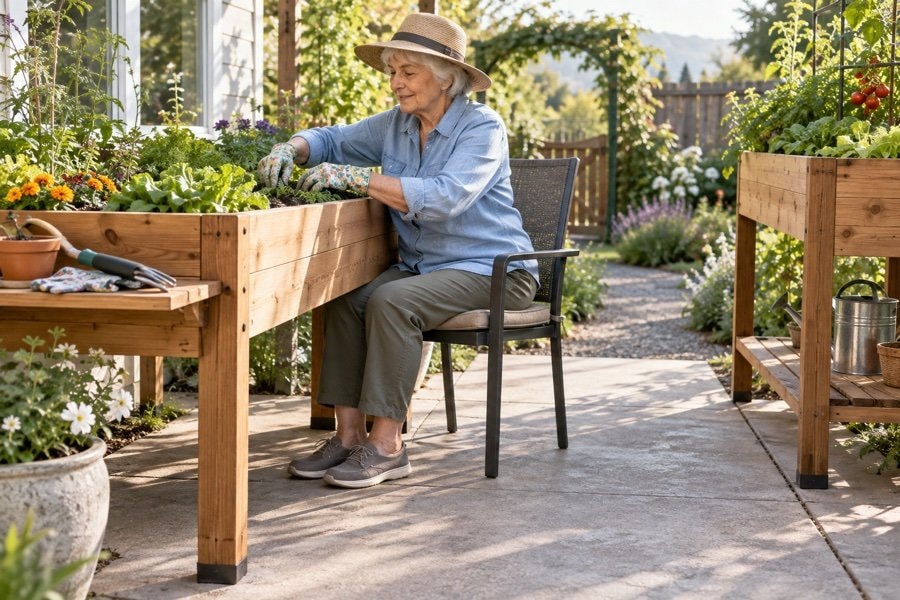
A useful garden workstation supports the position a person can maintain comfortably. Bed height is only one dimension; reach, clearance, surface and tool placement complete the setup.
Choose the Working Position First
Decide whether the main user will sit facing the bed, sit alongside it or stand. Use the actual chair, stool or mobility aid during planning. Seat height and armrests change both knee clearance and forward reach.
Observe the motions of sowing, weeding and harvesting. Fine tasks need the work closer than broad watering. Build around the most frequent demanding motion rather than an abstract standard.
Test Height and Reach
Set a temporary tray on boxes and adjust it until shoulders stay relaxed and elbows remain near the sides. From a seated position, reach without leaning the torso far forward. From standing, avoid a surface so low that every task requires rounding over it.
A bed accessed from one side must be narrower than one approached from both sides. The design steps in accessible raised beds help translate this reach test into a permanent garden.
Provide Knee and Toe Clearance
A seated gardener may need open space beneath the growing surface. Keep braces, irrigation and stored tools out of that zone. Protect knees from sharp corners and make the edge visually clear.
Table planters with open clearance hold less soil than ground-connected beds and dry faster. Choose crops with root depth that fits the container and provide dependable drainage. Structural supports must handle the full weight of wet mix.
Stabilize Seats and Surfaces
Use a chair or stool suited to outdoor ground, with a wide base and a height that allows controlled sitting and rising. Lock wheels before reaching. Do not place one leg on mulch and another on paving where the seat can tilt.
Paths should be firm, level and wide enough for approach and turning. Repair settled edges and keep hose lines away from chair legs. A small shelf or tool caddy prevents repeated bending to the ground.
Arrange Water and Tools
Install reachable shutoffs and use lightweight hose sections or a small watering wand. Store frequently used hand tools between seated knee and shoulder height. Keep blades sheathed and avoid hanging tools where handles project into the approach.
Use trays with raised edges so seed packets and labels do not blow away. A clamp, scoop with a larger grip or prefilled cell tray can make detailed work easier; more options appear in adaptive techniques.
Create More Than One Station
A potting bench, elevated salad planter and seated observation spot can serve different tasks. Not everything needs to happen at one universal height. Place the stations along a simple route so tools and harvests travel only a short distance.
Review the setup after a season. Note where shoulders rise, wheels catch or the middle stays unweeded. Ask the user what they avoid, then change that point first. If pain, balance changes or a health condition affects suitable activity, ask your own clinician or therapist for individualized guidance. Garden design can support a plan, but it should not invent one.
A Small, Useful Trial
Set up a temporary work surface at adjustable heights and complete the same brief potting task while seated and standing. Use the real chair and tools. Note shoulder position, forward reach, knee clearance and where supplies naturally land. Create separate stations if one height cannot serve both fine hand work and heavier material handling comfortably.
Repeat the mock-up with a tray, watering vessel and harvest container in their planned positions. Supplies can occupy the knee space or force a reach that an empty surface hides. Practice approaching, working, setting down a sharp tool and leaving the station without moving the seat sideways. Mark the comfortable work zone directly on the temporary surface. Keep frequently used crops and controls inside that zone, and give occasional tasks a separate station when their reach or load is different.
Use the Real Seat
Prototype with the chair, stool or mobility aid that will actually approach the bed. A generic seat can hide critical differences in height and clearance.
Plan where harvested material goes after it leaves the bed. A reachable picking surface can still lead to a heavy container on the ground. Use smaller baskets, a shelf at working height or a cart that accepts the container without another lift. Keep the return route clear enough to move the harvest while seated or standing without twisting around supports.