Accessible Raised Beds and Vertical Growing
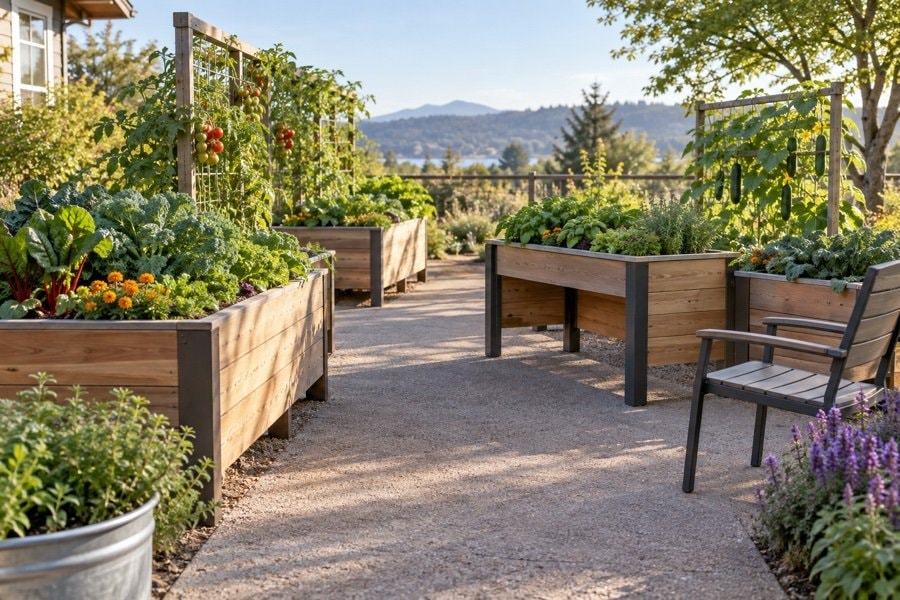
Raising soil or training plants upward can reduce bending, but height alone does not create access. Reach, knee space, path surface and water placement determine whether the setup works.
Measure Functional Reach
Sit or stand in the position that will be used and reach forward without leaning hard on the bed edge. Mark that distance. A bed approached from one side should be no wider than the comfortable reach; access from both sides can allow more width, provided both paths remain usable.
Mock up the edge with boxes or a table before building. Test sowing, pulling a weed and lifting a watering can. Fine work requires a shorter reach than simply touching the soil.
Choose Height for the Main Tasks
A moderate height may suit standing cultivation, while a higher edge brings herbs or strawberries closer to eye and hand level. For seated use, provide knee and toe clearance rather than a solid wall directly in front. Rounded or broad edges can offer a resting place, but they must not invite unsafe climbing or sitting if not designed for it.
Deep planters hold more wet soil and require stronger construction. Drainage must have a safe outlet. Use durable materials appropriate for soil contact and obtain local construction guidance for large or load-bearing structures.
Build Stable, Generous Paths
Paths should be firm, level, nonslip and wide enough for the mobility aid, cart or seated turn that will actually occur. Include passing or turning spaces rather than designing only a straight corridor. Edges should be visible and should not catch wheels or toes.
Keep hoses out of the travel line. Place shutoffs within reach and use short feeder lines to beds. Good access disappears quickly when a path becomes a storage strip for pots and tools.
Train Plants Within Reach
Vertical supports can bring fruit into view and keep vines out of paths. Set the lowest and highest training points within comfortable reach, accounting for the plant's mature growth. A trellis that continues far overhead merely replaces bending with shoulder-height work.
Use soft ties and inspect them as stems thicken. Place heavy fruit in slings where needed, and anchor supports for wind and crop weight. Review overhead garden work before choosing trellis height.
Select Crops for Repeated Access
Put frequently harvested herbs, greens and beans closest to the easiest approach. Reserve less accessible corners for plants needing fewer visits. Compact varieties can prevent vines and leaves from narrowing paths.
Combine these choices with the crop guidance in raised bed gardening and vertical gardening. The accessibility layer changes where and how the plants are grown, not their basic requirements for light, soil and water.
Plan Filling and Renewal
Have soil delivered near the structure, move it in small loads and fill in stages. A high bed solves future bending only after a demanding construction day, so use the methods in digging and lifting or arrange help.
Provide a way to top up soil without carrying bags along a narrow path. Keep a lightweight hand tool and harvest container near the bed. Revisit the layout after a full season: a removable trellis panel, relocated tap or slightly narrower planting strip may improve daily use more than a complete rebuild.
A Small, Useful Trial
Build a temporary full-size corner of the proposed bed from boxes and a board. Approach it with the actual chair, cart or mobility aid and simulate sowing, weeding, watering and reaching a low trellis. Mark unreachable areas and turning conflicts. Adjust width, height and path before pricing permanent materials or ordering soil.
Add temporary markers for the hose connection, harvest container and tool rest, then repeat the approach with the bed mock-up partly occupied. Plants, trellis growth and baskets reduce clear space over the season. Confirm that the gardener can reach shutoffs, turn around and leave without backing into an edge. Test drainage and wet-path traction in the plan as well. Accessibility belongs to the whole route from gate to bed, not only to the height of the soil.
Prototype the Reach
Use temporary boxes at the planned height and width. Test real motions from the real chair or standing position before committing materials.
Also plan how the bed will be filled and renewed. Soil, compost and mulch arrive as bulky loads, and a convenient working height can become an awkward dumping height. Leave a firm cart approach, choose a safe place to divide material and protect the seated work zone from delivery traffic. Future maintenance should be possible without climbing into the bed or reaching across the trellis.