Growing Sweet Corn in a Home Garden
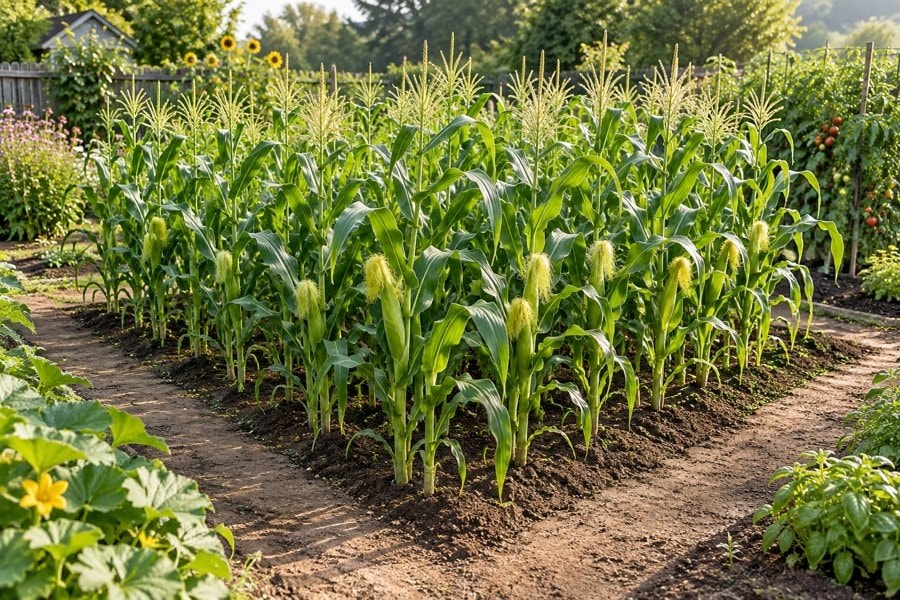
Sweet corn needs space, sun and neighboring plants for dependable pollination. A short block of several rows usually performs better than one long decorative row.
Give Corn a Suitable Place
Choose the sunniest practical bed with enough room for a block. Corn casts shade and catches wind, so place it where it will not overwhelm lower crops or block important sight lines. Deep, workable soil and consistent water support the plant's rapid summer growth.
Use a soil test to guide fertility. Corn is a demanding crop, but concentrated additions can damage seedlings or move beyond the root zone. Spread recommended amendments evenly and account for compost already applied.
Wait for Warm Soil
Sow after the soil has warmed and the risk of damaging cold has passed for the variety. Plant seed at a consistent depth into moist soil and mark the block. If birds or rodents disturb rows, use a secure physical cover during germination and remove it before shoots are restricted.
Thin crowded seedlings by cutting extras at soil level if pulling would disturb neighbors. Aim for even spacing; a few strong plants are better than a dense row competing for light and water.
Plant in Blocks for Pollination
Corn is wind-pollinated. Pollen falls from tassels onto silks, and each silk connects to a potential kernel. Several short adjacent rows increase the chance that pollen reaches silks compared with a single long row.
Gardeners sometimes hand-shake stalks during pollen shed in still weather, but basic layout is the first tool. Keep different maturity groups separated by time or adequate distance if cross-pollination could affect eating quality.
Water Through Tasseling and Ear Fill
Check soil moisture deeply, particularly as tassels and silks emerge and ears fill. Water at the base rather than wetting foliage repeatedly. Mulch can conserve moisture after seedlings are established, but leave the stem base open and watch for hidden pests.
Drip lines simplify even delivery in a block. Lay and test them while plants are small, using the checks in drip irrigation. Once rows are tall, repairing a central line becomes awkward.
Support Without Damaging Roots
Corn makes brace roots near the surface. Cultivate weeds shallowly and stop close hoeing as those roots develop. Drawing a modest amount of soil toward the base may add support, but deep chopping can remove the very roots that anchor the stalk.
After wind, straighten only plants that can be moved without breaking the stem or roots. A perimeter windbreak may help exposed gardens, provided it does not shade the block.
Harvest at the Brief Sweet Stage
Watch silks brown and dry, then test a representative ear by peeling back a small section. Kernels for fresh eating should be plump and release a milky juice when pierced; watery kernels are early, while thick or doughy kernels are later. Replace the husk if the ear needs more time.
Pick during the cool part of the day and use or chill ears promptly. Record the sowing-to-harvest interval in a garden journal. For a longer season, sow compatible blocks in stages as described in succession planting, while preserving enough plants in each block for pollination.
A Small, Useful Trial
Plant a compact block with several short rows and tag three ears at the first silk stage. Note tassel timing, still or windy days and kernel fill at harvest. If ears have scattered blank areas, review block density and whether silks emerged during pollen shed. Do not alter spacing and variety at the same time in the next comparison.
At harvest, keep the tagged ears separate and sketch where their plants stood within the block. Compare kernel fill on outside and interior rows, then relate gaps to silk timing and interruptions such as heat, drought or a second variety shedding pollen nearby. Save the block diagram with the sowing date. Next season, change only one relevant factor—block shape, timing or water consistency—so the new ears answer a clearer pollination question.
Think in Blocks
When space is tight, shorten the rows and add more of them. Neighboring tassels and silks matter more than row length.
Water access matters most as tassels and silks appear, so check that the entire block can be reached without dragging a hose through stalks. Place the line before stems grow tall and mark shutoffs at the bed edge. When checking ears, walk the outer paths rather than squeezing between rows. A compact block supports pollination best when irrigation and harvest routes do not flatten its center.