A Practical Warm-Up Before Heavy Garden Work
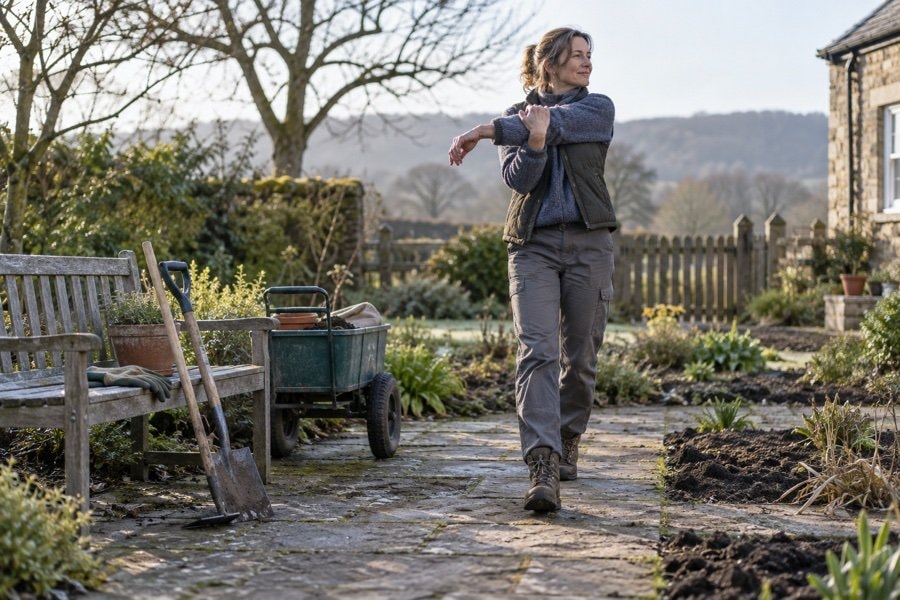
A garden warm-up does not need special equipment or a long routine. Its purpose is to move gradually from everyday activity into the reaches, steps and grips the next task will require.
Start With the Work Plan
Walk the garden first. Check footing, move hoses and identify the heaviest job. Decide how the material will travel and where it will be set down. Planning is part of warming up because it prevents a cold start with an awkward surprise.
Gather tools and adjust handles before beginning. If the first task is unloading soil, divide the load or stage a cart. The digging and lifting guide helps organize the route.
Raise Your General Activity Gradually
Walk at an easy pace around the yard for several minutes, letting arms swing naturally. Add gentle direction changes and a few deliberate steps over the kinds of surfaces you will use. The aim is to feel warmer and more alert, not tired.
Cold mornings may require a longer gradual start. In hot weather, preparation still matters, but use shade, keep it easy and shorten the work plan rather than adding heat before the main task.
Rehearse the Motions
Move shoulders through a comfortable range, open and close the hands, and make slow hip and knee bends suitable for your body. Practice the digging stance without driving the tool into soil. Step and turn with the feet rather than twisting in place.
Keep movements smooth and within a comfortable range. This is not the moment for forced stretching, bouncing or trying to increase flexibility. If a motion hurts, stop and choose another work position.
Use the Tool With No Load
Hold the shovel, hoe or pruner and make several slow, unloaded motions. Confirm that the handle length, grip and lock feel secure. A loose head or sticky pruner should go to the workbench, not into a high-effort task.
For a wheelbarrow, walk the empty route and test corners, gates and slopes. For a ladder or platform, inspect the ground and setup before carrying tools upward. Tool checks belong before fatigue and urgency enter the day.
Begin With a Moderate Block
Start the actual job at less than full pace. Take smaller shovel bites, make a few test cuts or move a light load first. Technique problems often show up immediately and can be corrected before the main work begins.
Set a timer or a visible stopping point. The pacing guide explains how to alternate movement patterns and keep cleanup within the energy budget.
Adapt to Your Own Situation
A warm-up is general preparation, not treatment for pain or injury. If you have a health condition, recent procedure or clinician-provided movement limits, ask your own clinician which activities are appropriate. Do not use a generic routine to test an injured area.
Stop if pain, dizziness, unusual shortness of breath or loss of control appears. Otherwise, keep the routine short enough to repeat every time. The most valuable warm-up is a consistent transition: inspect, walk, rehearse, test the tool and begin gradually.
A Small, Useful Trial
Before the next digging session, use the same short sequence: inspect the route, walk easily, rehearse unloaded motions and begin with small tool bites. Set a conservative work block in advance. Record whether any stance or tool issue appears during rehearsal. Correct that setup before increasing the load, and keep the sequence short enough to repeat.
Link each rehearsal motion to the first real task. If the plan includes digging, practice the stance and small blade placement; for pruning, check the reach and opening motion; for carrying, walk the cleared route with an empty container. The rehearsal is also an equipment check. A loose handle, unstable cart or unexpectedly hard ground is a reason to change the job before loading it. Keep the sequence calm and familiar so it remains part of ordinary setup.
Rehearse Before Loading
Make a few slow digging, lifting or pruning motions with little or no resistance. Adjust the stance and tool before the real load begins.
Keep the first loaded minutes deliberately lighter than the main work block. Use a partly filled container, loosen the easiest section of soil or begin on stems comfortably within reach. If the real motion differs sharply from the rehearsal, pause and reset the stance or tool. The transition should confirm the plan, not become a challenge to continue despite poor footing or control.