Growing Asparagus: Plan a Productive Perennial Bed
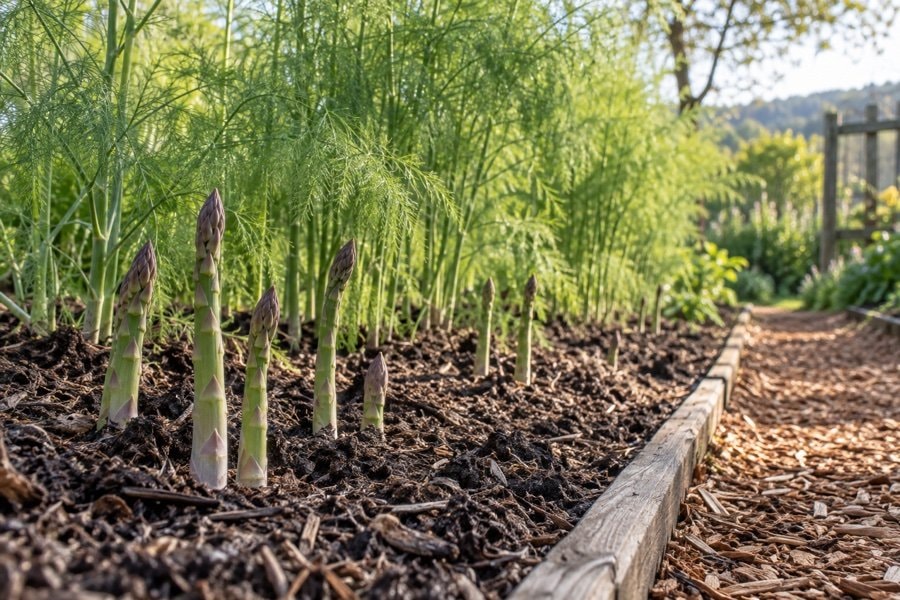
Asparagus is a long-term garden commitment. Careful site preparation and restrained early harvesting allow crowns to build the fern growth that supports future spears.
Choose a Permanent Site
Place asparagus where full sun, drainage and access will remain suitable for years. The mature ferns are tall and can shade nearby vegetables, so a north edge or dedicated bed often works well. Avoid low ground that stays waterlogged through winter.
Test the soil before planting and correct documented needs across the entire bed. Remove persistent perennial weeds thoroughly; digging them out later among established crowns is difficult. Plan paths so no one must step into the root zone.
Select Crowns or Seed
One-year crowns shorten the establishment period, while seed offers more plants at lower initial cost but requires patience. Choose vigorous, healthy material adapted to the region. Keep crowns cool and slightly moist before planting, never dried out or sitting in water.
Plant when soil is workable. Spread roots over a low ridge in a prepared trench, position crowns at a consistent depth and cover in stages if local practice recommends it. Mark the row ends permanently because emerging spears can be easy to miss.
Prioritize Fern Growth
Spears that are not harvested open into ferns, which gather energy for the crown. During establishment, allow plants to fern out rather than taking a full crop. Even in mature beds, end harvest with enough season remaining for vigorous fern growth.
Support ferns where wind knocks them into paths. Water during prolonged dry periods and mulch to suppress weeds, keeping the crown area from remaining saturated. Use test results and observed growth before adding fertility.
Keep Weeds From Taking Over
Weeds compete with shallow feeder roots and become hard to remove among ferns. Hoe carefully while seedlings are small, pull after rain and prevent seed. Avoid deep cultivation over crowns. The steady routine in weed management is safer than an annual rescue dig.
Renew mulch after clearing weeds. A low-disturbance approach suits established asparagus because the bed does not need yearly turning. Remove only material that is diseased or obstructive.
Harvest Mature Plants Carefully
Cut or snap firm spears while tips remain tight and before they grow tall and fibrous. Harvest rounds may be needed daily during warm weather. Stop when new spears become noticeably thinner or at the locally recommended end of the cutting window.
Do not take every emerging spear from weak plants. Leaving more to fern helps the crown recover. Keep a note of declining sections so you can examine drainage, crowding or disease rather than extending harvest there.
Close the Season
Let healthy ferns remain while green. After they turn fully brown and dormant, cut them near the ground and remove debris that could harbor pests. In windy areas, cutting may happen sooner after dormancy so dry stalks do not scatter.
Because asparagus stays in place, it does not participate in annual crop rotation. Rotate other crops around it and avoid using the permanent bed as a shortcut or storage area. With measured harvest, weed prevention and healthy fern time, a carefully sited planting can remain a dependable spring feature for many seasons.
A Small, Useful Trial
Mark a three-foot section of the bed and count harvestable spears there without extending the cutting period. Note when spear diameter begins to decline and when vigorous fern growth takes over. Compare that record the next spring. It provides a site-specific reason to stop harvest instead of relying only on enthusiasm or a calendar date.
Keep the marked section in place after harvest ends. Count how many strong stems develop into ferns, note gaps and watch whether wind or path traffic bends them. Photograph the section at midsummer and again at dormancy from the same point. If the stand weakens, review harvest duration, moisture, weed competition and drainage together before replacing crowns. The continuing fern record is more informative than spear count alone because it follows the bed through its rebuilding season.
Let the Ferns Work
The tall green ferns are not waste growth. They replenish the crown, so protect them after the harvest period ends.
Use permanent row markers that remain visible after the ferns are cut. Before adding mulch or weeding in early spring, locate both row edges so tools do not enter the crown line. Keep new annual plantings outside that marked zone. A clear boundary protects the bed during the months when no tall growth shows where the long-lived roots and crowns are concentrated.