Gardening With Arthritis: Adapt Tasks and Spaces
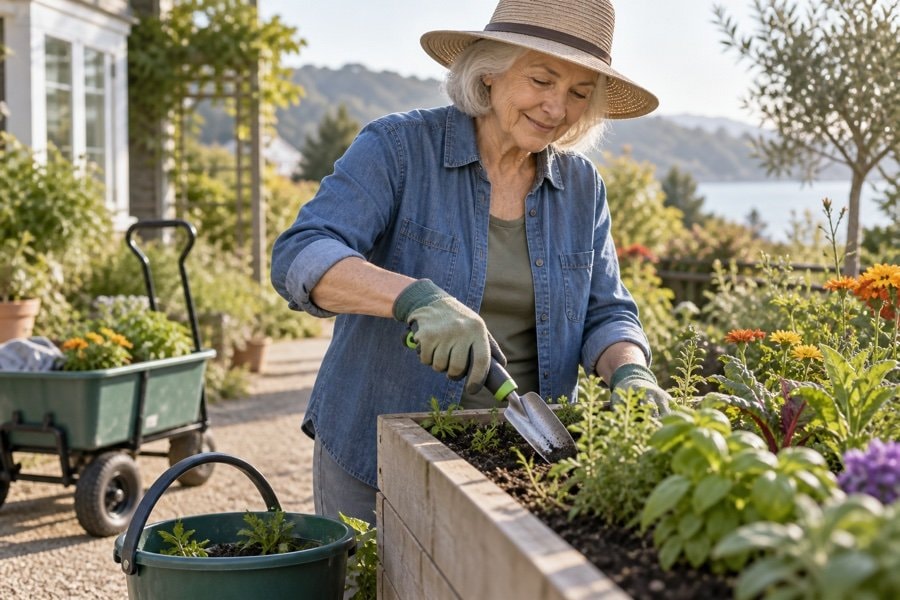
Gardening with arthritis is not one fixed set of rules. The useful approach is to reduce force, repetition and difficult positions, then adjust the day's plan to how tasks actually feel.
Start With Your Own Guidance
Arthritis includes different conditions and affects people differently. Ask your own clinician or therapist about gardening movements if you have severe symptoms, changing function, a recent procedure or uncertainty about safe activity. Generic garden advice cannot replace an individualized plan.
The public-health guide to physical activity and arthritis recommends starting slowly, paying attention to how the body feels and contacting a health care provider if symptoms are severe. Use that principle to scale garden tasks rather than treating every day alike.
Reduce Grip and Pinch Force
Choose handles that fill the hand comfortably and have a secure nonslip surface. Use two hands for larger tools and broad bucket handles for carrying. Keep pruners sharp and step up to a longer-lever tool when a stem requires repeated hard squeezing.
Release the grip between actions. A holster or bench lets the hand open instead of clenching a tool throughout inspection. More tool-specific ideas are in hand, wrist and grip load.
Bring Work Into an Easier Range
Pot at a standing or seated bench, place frequently harvested crops near path edges and use long-handled tools for shallow cultivation. A raised bed can help only when its width, height and approach match the gardener. Test dimensions as described in accessible raised beds.
Use a stool or kneeler rather than remaining in a deep crouch. Keep a stable support available for rising. Alternate low, seated and upright jobs before any one position becomes difficult.
Simplify Carrying and Watering
Carry two small balanced containers instead of one large load, or use a stable cart. Store soil and compost near the beds. Fit shutoff valves where they are reachable and use lightweight hose sections so watering does not begin with dragging a long wet line.
Drip irrigation can reduce carrying, but emitters still need inspection. Keep a small watering can near containers for spot corrections. Design is successful when it removes repeated trips without creating complicated maintenance.
Use Flexible Work Blocks
Begin with a short, moderate task and reassess. On a difficult day, protect essential watering and harvest while postponing digging or long pruning. On an easier day, do not automatically double the load; increase gradually and keep breaks planned.
Record which setup worked rather than only which joint was uncomfortable. The practical structure in pacing a garden day makes it easier to switch tasks without feeling that the plan has failed.
Choose Plants and Systems That Cooperate
Compact varieties, groundcovers and mulched beds can reduce staking and weeding. Perennial herbs near the kitchen shorten harvest walks. Self-watering containers may reduce watering frequency when they can be filled without awkward reaching.
Keep the parts of gardening that matter most and redesign the chores around them. Ask for help with one-time construction or heavy delivery so the everyday garden becomes easier. Stop and contact your clinician about severe, persistent or worsening symptoms; the goal is a garden that remains adaptable, not a test of endurance.
A Small, Useful Trial
Select one frequent task and prepare two legitimate versions: a short essential version and a longer optional version. Test a larger grip, raised work surface or smaller carrying container while keeping the task itself consistent. Record which modification lowers effort without reducing control. Share persistent concerns with your own clinician or therapist rather than interpreting the trial medically.
Keep the two task versions written where the tools are stored. On a variable day, start with the essential version and add only one optional block after reassessing the setup. Note which feature changed demand—a broader grip, higher surface, lighter container or shorter route—without treating the result as a medical test. If symptoms persist, worsen or make a task uncertain, stop and ask your own clinician or therapist for guidance that reflects your condition and circumstances.
Keep Two Versions of the Plan
List an essential short round and an optional longer round. Choose after you begin moving, not according to yesterday's capacity.
Prepare fiddly work at a table before going outdoors. Open packets, write labels, sort fasteners and portion seed where light and seating are dependable. Carry the prepared tray to the bed instead of managing small items while kneeling or gripping them in one hand. Reverse the process at harvest: bring a light basket to a stable sorting surface instead of trimming and bundling everything in the row.